Tag: Fatality

  • Worker Electrocuted

    Worker Electrocuted

    What can we learn from this tragedy?

    On 2 June 2026, a worker was fatally electrocuted while servicing a scissor lift in Victoria, Australia. According to WorkSafe Victoria, the 34-year-old worker was undertaking maintenance activities when the scissor lift came into contact with high-voltage overhead powerlines at approximately 1:50pm. The worker died as a result of the incident. WorkSafe Victoria has commenced an investigation.

    While details remain limited, the incident highlights one of the most persistent workplace hazards across construction, maintenance, logistics, agriculture, utilities, and industrial operations worldwide: working near overhead electrical assets.

    Sadly, fatalities involving mobile plant and overhead powerlines are not uncommon. Despite decades of awareness campaigns, regulations, exclusion zones, and guidance materials, workers continue to lose their lives after plant, equipment, or conductive materials enter unsafe proximity to energized powerlines.

    This tragedy serves as a reminder that electricity remains unforgiving. In many cases, a single momentary lapse or failed control can have irreversible consequences.

    What We Know

    Based on information released by WorkSafe Victoria:

    • The incident occurred on 2 June 2026.
    • The worker was 34 years old.
    • The worker was servicing a scissor lift.
    • The scissor lift made contact with high-voltage overhead powerlines.
    • The worker suffered a fatal electrocution.
    • WorkSafe Victoria has commenced an investigation.

    At the time of writing, no additional details regarding the exact work activity, worksite conditions, supervision arrangements, or planning processes have been released.

    Understanding the Hazard

    Many workers assume physical contact with a powerline is required for electrocution to occur.

    This is not always the case.

    Electricity can arc across air gaps when equipment comes within unsafe proximity of high-voltage conductors. WorkSafe Victoria has repeatedly warned that electrical current can “jump” from powerlines to nearby equipment even without direct contact.

    Scissor lifts present particular challenges because operators often focus on work tasks at height while simultaneously managing movement, positioning, and clearance distances.

    When overhead powerlines are present, the risk profile changes significantly.

    ICAM Analysis

    Absent or Failed Defences

    Failure of Separation from Electrical Hazards

    The primary failed defence appears to have been the loss of safe separation between the scissor lift and the overhead powerline.

    Whether through direct contact or electrical arcing, the worker was exposed to a fatal electrical hazard that should have been controlled through planning, exclusion zones, engineering controls, or work methods.

    Failure of Hazard Identification

    Overhead powerlines are generally visible hazards.

    One of the key questions investigators are likely to examine is whether the presence of the powerlines was identified during planning and risk assessment activities before work commenced.

    If the hazard was identified, investigators will likely assess whether adequate controls were implemented.

    If it was not identified, questions may arise regarding the effectiveness of pre-start inspections and risk assessment processes.

    Failure of Critical Risk Controls

    Most jurisdictions require specific controls when working near overhead powerlines, including:

    • Defined exclusion zones
    • Spotters or observers
    • Alternative work methods
    • Physical barriers
    • Isolation or de-energisation where practicable
    • Operator training

    The incident suggests one or more of these controls were either absent, ineffective, or unable to prevent exposure.

    Individual and Team Actions

    ICAM recognises that worker actions occur within systems designed by organisations.

    While investigators may examine operator actions immediately before the incident, modern safety investigations focus on understanding why the system allowed a worker to be placed in harm’s way.

    Questions investigators may consider include:

    • Was the worker trained in powerline hazards?
    • Was a spotter being used?
    • Had the work been adequately planned?
    • Was supervision appropriate?
    • Were exclusion distances clearly established?

    Task and Environmental Conditions

    Several environmental factors can increase the likelihood of powerline incidents:

    • Sun glare
    • Poor visibility
    • Visual distractions
    • Congested work areas
    • Powerline sag
    • Changing site conditions

    WorkSafe Victoria has previously highlighted that environmental conditions can make overhead powerlines difficult to see and can affect safe clearance distances.

    Investigators will likely assess whether any environmental conditions contributed to the event.

    Organisational Factors

    Work Planning and Risk Assessment

    One of the most common findings in powerline-related fatalities is inadequate planning.

    Where work activities involve elevated plant, the presence of overhead electrical assets should trigger additional controls before work begins.

    Investigators will likely examine:

    • Safe Work Method Statements (SWMS)
    • Job Safety Analyses (JSA)
    • Pre-start inspections
    • Permit systems
    • Site inductions

    Critical Risk Management

    Powerline contact is a well-known fatal risk.

    Organisations managing work near electrical infrastructure should have clearly defined critical controls that are routinely verified in the field.

    Investigators may examine whether those controls existed and whether they were functioning as intended.

    Potential Root Causes

    Based on currently available information, potential causal pathways may include:

    Immediate Causes

    • Scissor lift entered an unsafe proximity to overhead powerlines
    • Electrical energy transferred to the equipment and/or worker

    Potential Contributing Factors

    • Inadequate hazard identification
    • Failure to establish exclusion zones
    • Absence of a dedicated spotter
    • Inadequate work planning
    • Insufficient supervision
    • Training deficiencies
    • Environmental conditions affecting visibility

    Potential Organisational Causes

    • Weak critical risk management systems
    • Inadequate verification of controls
    • Insufficient electrical hazard awareness
    • Poor planning for high-risk work activities

    These remain possible contributing factors only until the official investigation is completed.

    Lessons for Industry

    Regardless of the final findings, several practical lessons emerge.

    1. Identify Powerlines Before Work Starts

    Every task involving elevated plant should include a formal assessment of nearby electrical assets.

    2. Establish and Enforce Exclusion Zones

    Safe approach distances should be clearly identified, communicated, and physically controlled where possible.

    3. Use Dedicated Spotters

    Where work occurs near overhead powerlines, trained spotters can provide an additional layer of defence.

    4. Consider Alternative Work Methods

    Where practicable, redesign the task to eliminate or reduce exposure to overhead electrical hazards.

    5. Strengthen Critical Control Verification

    Supervisors should routinely verify that powerline controls are implemented in the field rather than assuming compliance.

    6. Improve Electrical Hazard Awareness

    Workers operating mobile plant, elevated work platforms, cranes, and lifting equipment should receive regular training regarding powerline risks and electrical arcing.

    7. Review Emergency Response Arrangements

    Workers should understand the correct actions to take if equipment contacts overhead powerlines, including remaining within the equipment where appropriate and following established emergency procedures.

    Final Thoughts

    Although the investigation remains in its early stages, this incident appears to involve a hazard that is both well known and highly controllable.

    Every year, workers around the world are killed after equipment enters unsafe proximity to overhead powerlines. The technology, procedures, and knowledge needed to prevent these incidents already exist.

    The challenge for organisations is ensuring that critical controls are consistently applied whenever workers operate near electrical hazards.

    For the family, friends, and colleagues of the worker involved, this tragedy is a stark reminder that even routine tasks can become fatal when hazardous energy is not effectively managed.


    Disclaimer

    This article is provided for educational and informational purposes only. It is based on publicly available information available at the time of writing. The WorkSafe Victoria investigation remains ongoing, and the causes, contributing factors, and circumstances discussed in this article are preliminary observations rather than confirmed findings.

    Nothing in this article should be interpreted as a legal determination of fault, liability, negligence, or regulatory non-compliance. Readers should rely on official investigation findings and consult appropriately qualified safety, engineering, and legal professionals when assessing similar risks within their own organisations.
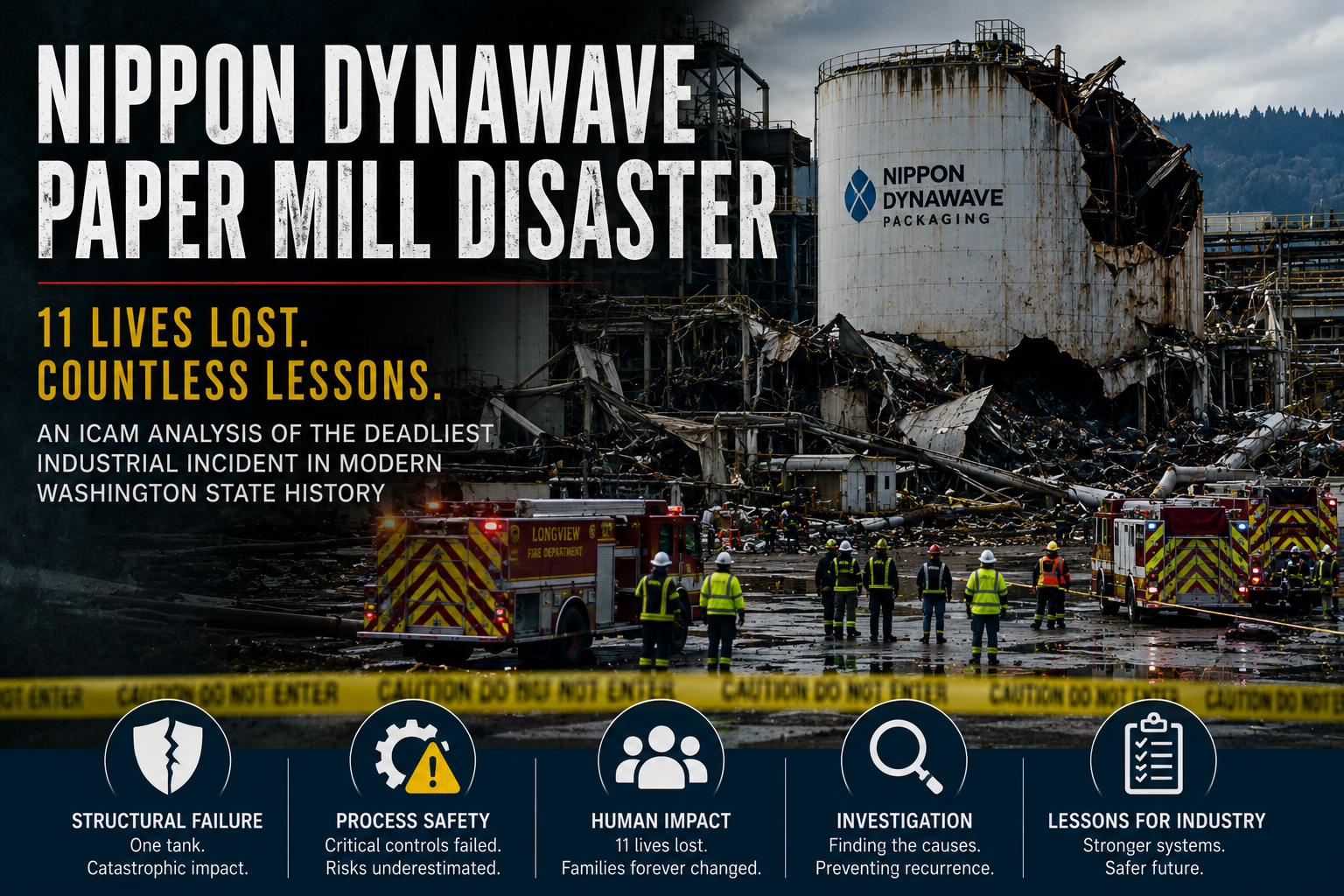
  • 11 Workers Killed in Nippon Dynawave Paper Mill Disaster

    11 Workers Killed in Nippon Dynawave Paper Mill Disaster

    On 26 May 2026, a catastrophic industrial incident occurred at the Nippon Dynawave Packaging paper mill in Longview, Washington. A large storage tank containing approximately 900,000 gallons (3.4 million litres) of white liquor—a highly caustic chemical used in paper manufacturing—failed catastrophically, resulting in the deaths of 11 workers and injuries to several others. The incident is believed to be one of the deadliest workplace disasters in modern Washington State history.

    The scale of the event shocked the manufacturing sector and has prompted widespread discussion about process safety, asset integrity, and the management of major industrial hazards.

    While the official investigation remains ongoing, the incident already provides important lessons for organisations operating facilities that store or process hazardous substances.

    What Happened?

    According to publicly available reports, the incident occurred during the early morning hours around a shift change period. A large process tank containing white liquor suffered a catastrophic failure, releasing a significant volume of hazardous chemical solution and causing extensive structural damage throughout the surrounding area.

    White liquor is a corrosive chemical mixture commonly used in the kraft pulping process. In addition to causing severe chemical burns, large-scale releases can create challenging emergency response conditions due to contamination, visibility issues, and ongoing structural hazards.

    Recovery operations continued for several days as emergency crews worked to locate missing workers and stabilise the damaged facility.

    Understanding the Incident Through an ICAM Lens

    The Incident Cause Analysis Method (ICAM) focuses on understanding how organisational, technical, and operational factors combine to create pathways to failure.

    Rather than looking for a single mistake, ICAM examines why multiple layers of defence failed simultaneously.

    Failure of Primary Containment

    The most obvious failure was the storage tank itself.

    Industrial chemical tanks are designed to safely contain hazardous materials under a wide range of operating conditions. The fact that the vessel catastrophically failed suggests a significant breakdown in one or more areas, including:

    • Structural integrity
    • Corrosion management
    • Engineering design
    • Maintenance activities
    • Inspection programs
    • Operational conditions

    While investigators have not yet identified the exact failure mechanism, the tank’s inability to contain its contents represents the first critical defence that failed.

    Asset Integrity Management

    One of the key areas likely to be examined is asset integrity management.

    Large industrial vessels require regular inspection, maintenance, and condition monitoring throughout their service life. Effective asset integrity programs typically include:

    • Corrosion monitoring
    • Thickness testing
    • Structural inspections
    • Risk-based maintenance planning
    • Fitness-for-service assessments

    A common theme in major industrial disasters is the presence of latent defects that remain undetected until a catastrophic event occurs.

    Investigators will likely examine whether warning signs existed and whether those signs were recognised and addressed appropriately.

    Process Safety Controls

    Facilities handling hazardous chemicals rely on multiple layers of protection.

    These controls may include:

    • Monitoring systems
    • Pressure and level controls
    • Alarm systems
    • Emergency shutdown systems
    • Engineering safeguards

    The severity of the incident suggests that either the initiating event occurred too quickly for these controls to prevent escalation or the controls themselves were ineffective.

    This will likely be a major focus of the investigation.

    Potential Contributing Factors

    Although definitive conclusions cannot yet be drawn, several factors commonly associated with major process safety incidents may be relevant.

    Ageing Infrastructure

    Many pulp and paper facilities operate equipment that has been in service for decades.

    As assets age, organisations face increasing challenges associated with:

    • Corrosion
    • Material degradation
    • Historical modifications
    • Increased maintenance requirements

    Without effective ageing asset management strategies, the likelihood of significant failures can increase over time.

    Organisational Oversight

    Major hazard facilities require strong governance systems that ensure critical risks are identified, monitored, and controlled.

    Questions investigators may explore include:

    • Were inspections completed as required?
    • Were identified defects appropriately managed?
    • Were maintenance activities prioritised effectively?
    • Were critical risks regularly reviewed by leadership?

    Major incidents often reveal weaknesses not only in equipment but also in decision-making and organisational oversight.

    Shift Change Exposure

    Reports indicate the incident occurred during a shift transition.

    While shift change is unlikely to have caused the event, these periods often involve increased worker movement and occupancy levels. As a result, more workers may have been exposed when the tank failed.

    Key Lessons for Industry

    Regardless of the final investigation findings, several lessons are already emerging.

    1. Strengthen Asset Integrity Programs

    Organisations should ensure storage tanks, vessels, and critical infrastructure are subject to robust inspection and maintenance programs.

    Critical assets should be monitored based on risk, not simply age or inspection schedules.

    2. Verify Critical Controls

    Businesses should routinely verify that safety-critical controls are functioning as intended.

    The presence of a control on paper does not guarantee it will prevent an incident.

    3. Manage Ageing Assets Proactively

    Ageing equipment requires ongoing assessment and investment.

    Businesses should have formal strategies for:

    • Condition monitoring
    • Life-extension assessments
    • Equipment replacement planning

    4. Improve Process Hazard Analysis

    Facilities handling hazardous substances should regularly review major hazard scenarios using recognised methodologies such as:

    • HAZOP studies
    • Bowtie analysis
    • Layer of Protection Analysis (LOPA)

    These reviews help identify emerging risks before incidents occur.

    5. Strengthen Emergency Preparedness

    Major chemical releases can quickly overwhelm conventional emergency arrangements.

    Businesses should regularly test:

    • Emergency response plans
    • Evacuation procedures
    • Communication systems
    • Incident management capabilities

    Final Thoughts

    The Nippon Dynawave disaster serves as a tragic reminder that catastrophic industrial incidents remain possible even within mature industries.

    Although the paper manufacturing sector has a long history of managing hazardous processes, large inventories of chemicals, ageing infrastructure, and complex operations continue to present significant risks.

    As investigators work to determine exactly what happened, the broader lesson for industry is already clear.

    Major workplace disasters rarely result from a single failure. They occur when multiple safeguards, systems, and organisational defences break down simultaneously.

    The challenge for every organisation is ensuring those weaknesses are identified before they align.


    Disclaimer

    This article is provided for educational and informational purposes only. It is based on publicly available information and general process safety principles. Official investigations into the Nippon Dynawave incident remain ongoing, and the causes and contributing factors discussed in this article are preliminary assessments rather than confirmed findings.

    Nothing in this article should be interpreted as a legal determination of fault, liability, negligence, or regulatory non-compliance. Readers should consult official investigation findings and seek advice from appropriately qualified professionals when assessing similar risks within their own organisations.
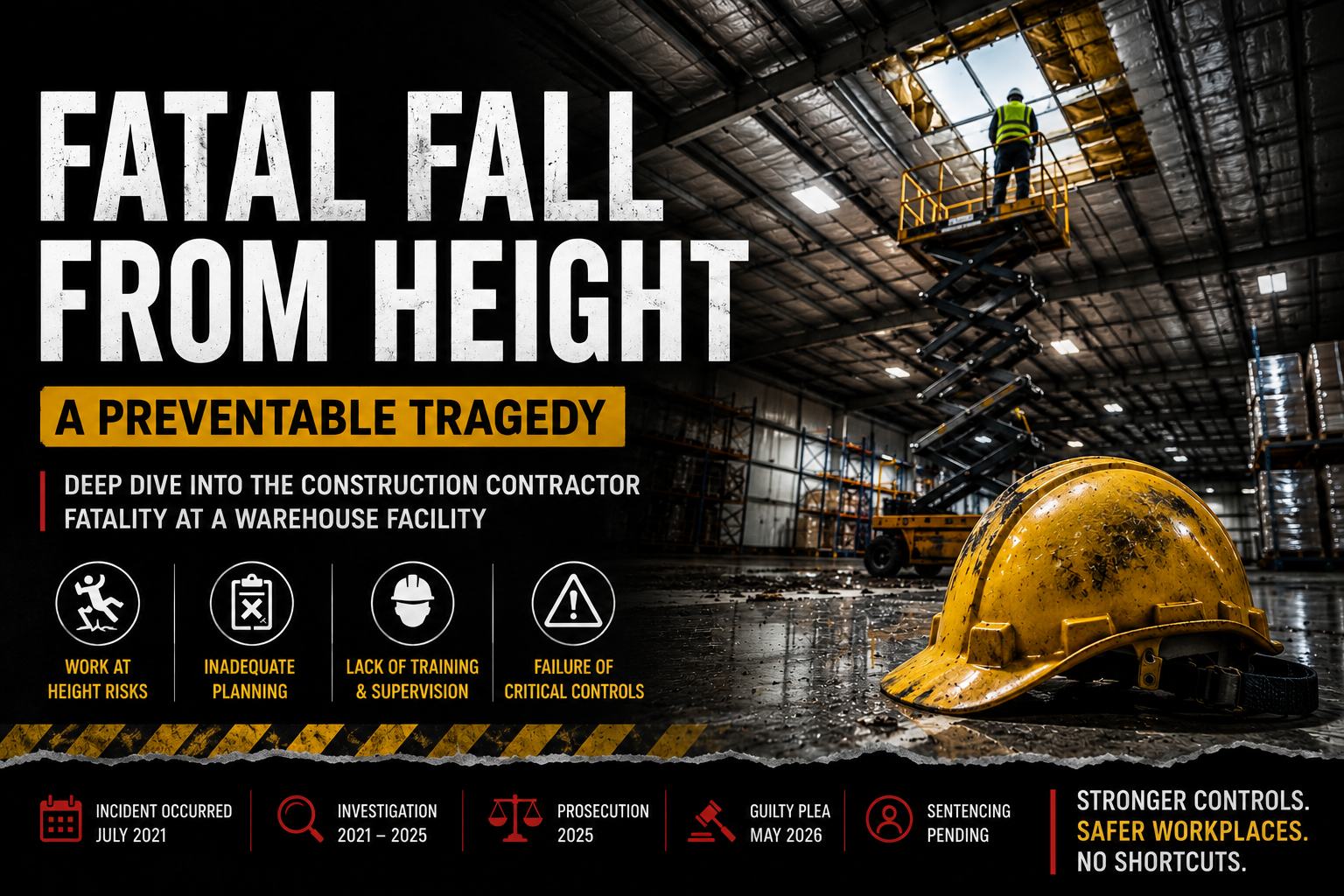
  • Fatal Fall from Height: 5 Years to Prosecution

    Fatal Fall from Height: 5 Years to Prosecution

    One of the most important lessons in workplace safety is that incidents may occur in seconds, but accountability can take years.

    In May 2026, Risham Nominees Pty Ltd, trading as Centenary Bakehouse in Victoria, Australia, pleaded guilty to workplace manslaughter following the death of a contractor who fell approximately four metres while undertaking roof-related work at a warehouse facility. The prosecution represents one of the most significant workplace manslaughter cases to emerge under Victoria’s industrial safety laws and highlights how long serious workplace incidents can take to progress through investigation, enforcement, and court proceedings.

    For safety professionals, the timeline alone is noteworthy.

    The nearly five-year period between the fatality and guilty plea demonstrates the complexity of major workplace investigations, particularly where criminal liability is being considered. Investigators must examine physical evidence, organisational systems, supervision arrangements, planning documentation, witness testimony, and management decision-making before prosecutions can proceed.


    Incident Overview

    Court proceedings revealed that the company director had organised replacement works involving suspended insulation panels located approximately four metres above the warehouse floor. The task involved removing existing panels and replacing them with new sheeting materials.

    The work reportedly required four workers, however one participant was unavailable. In an effort to complete the task, an additional worker was sourced informally through existing contacts and engaged to assist with the work despite having no formal qualifications for the task.

    According to court evidence, the worker was provided with only general verbal instructions and was not given documented procedures, specific work-at-height guidance, or formal training relating to fall hazards. The worker subsequently fell approximately four metres and suffered fatal injuries.


    Incident Analysis

    Absent or Failed Defences

    1. Failure to Eliminate the Work-at-Height Risk

    The first failure appears to have occurred during planning.

    Under the hierarchy of controls, organisations should first determine whether elevated work can be eliminated altogether. There is no indication alternative methods were explored before workers were exposed to fall hazards.

    Potential alternative controls may have included:

    • Ground-level assembly methods
    • Elevated work platforms
    • Temporary engineered work platforms
    • Alternative installation sequencing

    The work appears to have proceeded directly into a high-risk work environment without sufficient consideration of safer alternatives.


    2. Absence of Effective Fall Protection

    The most significant failed defence was the apparent absence of effective fall prevention systems.

    Available information suggests:

    • No engineered fall prevention system was actively controlling the work area
    • No documented fall arrest arrangements were implemented
    • No evidence of a structured work-at-heights permit process
    • Available safety equipment was reportedly not being effectively utilised

    In ICAM terminology, a critical risk control appears either absent, ineffective, or unenforced.


    3. Inadequate Safe Work Method Planning

    The work involved multiple recognised high-risk construction activities:

    • Elevated work
    • Material handling
    • Roof and ceiling modifications
    • Potential exposure to unprotected edges

    Despite these hazards, evidence presented to the court suggests workers received only broad instructions to work safely and avoid falling.

    A formal Safe Work Method Statement (SWMS) should have identified:

    • Fall hazards
    • Control measures
    • Rescue arrangements
    • Supervision requirements
    • Equipment requirements
    • Worker competency requirements

    Individual and Team Actions

    Worker Actions

    There is no evidence that the deceased worker intentionally disregarded safety requirements.

    Instead, available information suggests the worker was operating within the work environment established by management.

    This distinction is important.

    This incident analysis methodology focuses on understanding how systems shape worker behaviour rather than attributing incidents solely to frontline actions.


    Supervisory Actions

    Potential supervisory failures include:

    • Allowing work to commence without verifying controls
    • Failure to confirm worker competency
    • Failure to verify use of fall protection
    • Inadequate monitoring of work-at-height activities

    The absence of structured supervision appears to have significantly increased exposure to risk.


    Task and Environmental Conditions

    Several workplace conditions likely increased vulnerability:

    Informal Workforce Engagement

    Court evidence revealed the worker was recruited informally after labour shortages emerged during planning.

    Informal engagement often creates risks including:

    • Incomplete inductions
    • Unverified competencies
    • Limited understanding of site hazards
    • Reduced supervision

    Production Pressure

    A recurring factor in serious incidents is schedule pressure.

    The decision to source an additional worker at short notice suggests maintaining progress on the task had become a priority.

    While production pressure is rarely identified as the sole cause of an incident, it frequently influences decision-making that weakens critical controls.


    Organisational Factors

    Safety Leadership

    The incident raises broader questions regarding safety leadership and governance.

    Effective safety systems require leaders to ensure:

    • Hazards are systematically identified
    • Critical controls are verified
    • Workers are competent
    • High-risk work is supervised

    The court proceedings suggest organisational systems were insufficiently mature to manage the risks associated with elevated work activities.


    Contractor Management

    One of the strongest lessons from this case relates to contractor management.

    The worker was reportedly not a regular employee and had been brought into the task through informal arrangements.

    Contractor management systems should ensure:

    • Competency verification
    • Formal onboarding
    • Role clarity
    • Supervision requirements
    • Safety accountability

    Without these controls, organisations may inadvertently expose workers to hazards they are neither trained nor equipped to manage.


    Latent Conditions

    Several latent organisational weaknesses appear evident:

    Latent ConditionPotential Outcome
    Informal hiring practicesUnverified competency
    Limited task planningInadequate hazard controls
    Weak supervisionUnsafe work practices unchecked
    Production prioritiesIncreased risk tolerance
    Poor critical control verificationFall hazards unmanaged

    These conditions often exist long before an incident occurs and remain invisible until a serious event exposes them.


    Root Cause Summary

    Based on publicly available court information, the most likely root causes include:

    Primary Causes

    • Failure to adequately control work-at-height risks
    • Absence of effective fall protection systems
    • Inadequate work planning
    • Failure to verify worker competency

    Contributing Causes

    • Informal contractor engagement
    • Insufficient supervision
    • Weak safety governance
    • Potential production pressure influences

    Recommendations for Industry

    Organisations seeking to reduce the likelihood of similar incidents should consider the following controls:

    1. Implement Mandatory Work-at-Height Verification

    Require supervisor sign-off confirming:

    • Fall protection installed
    • Anchor points verified
    • Rescue arrangements established
    • Worker competencies confirmed

    2. Strengthen Contractor Management Systems

    Require:

    • Competency assessments
    • Formal onboarding
    • Documented inductions
    • Defined supervisory accountability

    No worker should be engaged for high-risk work through informal arrangements.


    3. Introduce Critical Control Assurance Programs

    Develop verification systems that actively confirm:

    • Guardrails remain installed
    • Harness systems are used correctly
    • Work platforms remain compliant
    • Controls remain effective throughout the task

    4. Improve Safe Work Method Statement Quality

    SWMS documentation should move beyond compliance paperwork and become practical task-planning tools.

    Focus areas should include:

    • Critical risks
    • Control verification
    • Changing conditions
    • Escalation pathways

    5. Reinforce Stop-Work Authority

    Workers must be empowered to stop work immediately when:

    • Fall protection is absent
    • Conditions change
    • Hazards become uncontrolled
    • Instructions are unclear

    6. Conduct Leadership Field Verification

    Safety leaders should routinely verify critical controls in the field rather than relying solely on documentation.

    Direct observation remains one of the strongest predictors of effective risk management.


    Final Reflection

    The Centenary Bakehouse case is not simply a story about a worker falling four metres.

    It is a reminder that workplace fatalities are often the final outcome of decisions made days, weeks, or months before an incident occurs.

    The most striking lesson may be the timeline itself.

    A worker lost his life in July 2021.

    The guilty plea occurred in May 2026.

    Nearly five years separated the incident from the prosecution.

    For organisations, that serves as a powerful reminder that safety decisions made today may be scrutinised years into the future. More importantly, it reinforces that critical risk controls must be treated as non-negotiable long before investigators, regulators, or courts become involved.


    Disclaimer

    This analysis is provided for educational and professional discussion purposes only. It is based on publicly available court reporting, regulatory information, and presumed industry-standard conditions. It does not represent official findings beyond those presented in court proceedings and should not be relied upon as a legal determination of liability, causation, or regulatory compliance.

  • World Safety News – 01JUN26

    World Safety News – 01JUN26

    1. Chemical Tank Rupture Disaster — Longview, Washington, USA

    Incident Date: 26–28 May 2026

    At least eight workers were killed and several others injured following a catastrophic tank rupture at the Nippon Dynawave Packaging paper mill in Longview, Washington. The incident occurred when a large chemical storage vessel containing caustic white liquor collapsed during operations, releasing hundreds of thousands of gallons of hazardous chemical solution across the site.

    Investigators are examining vessel integrity, process safety management systems, maintenance controls, and potential structural failures associated with the storage tank. Recovery operations were complicated by chemical contamination and ongoing structural instability.


    2. Apprentice Lineman Fatality — Albany, Georgia, USA

    Incident Date: 27 May 2026

    A 20-year-old apprentice electrical lineman was killed while performing work for the City of Albany, Georgia. Limited details have been released regarding the incident; however, city officials confirmed the worker died while undertaking operational duties.

    Authorities have commenced an investigation into the circumstances surrounding the fatality, including work procedures, supervision, task planning, and electrical safety controls.


    3. Railway Tunnel Excavator Strike Fatality — Madrid, Spain

    Incident Date: 28 May 2026

    A 39-year-old contractor was killed while conducting maintenance activities inside a commuter rail tunnel in Madrid after being struck in the chest by the bucket of a backhoe excavator.

    Emergency crews attempted resuscitation for approximately 40 minutes but were unable to revive the worker. Investigators are reviewing plant movement controls, exclusion zones, communication procedures, and contractor supervision arrangements within the confined work area.


    4. River Mill Dam Testing Fatality — Oregon, USA

    Incident Date: 14–18 May 2026

    A specialist contractor was killed and a Portland General Electric employee injured during equipment testing activities at River Mill Dam in Clackamas County, Oregon.

    The incident occurred during operational testing procedures associated with dam infrastructure. Authorities have launched a workplace fatality investigation focusing on testing controls, energy isolation systems, procedural compliance, and contractor management arrangements.


    5. Wind Turbine Manufacturing Structure Collapse — Hull, United Kingdom

    Enforcement Outcome Published 26 May 2026

    Details emerged this week following regulatory action against Siemens Gamesa after a worker suffered life-changing injuries during wind turbine blade construction activities.

    The employee was working on a large internal turbine structure when support components were removed, causing an approximately 800-kilogram section to collapse onto her. Investigators found deficiencies in risk assessment processes, systems of work, and worker training relating to structural support controls.


    6. Telehandler Reversing Fatality — Cumbria, United Kingdom

    Enforcement Outcome Published 27 May 2026

    A waste and recycling company was fined following a fatal incident in which a worker was struck by a reversing telehandler at a recycling facility in Barrow-in-Furness.

    The investigation found inadequate traffic management arrangements and insufficient segregation between pedestrians and mobile plant operations. Authorities highlighted failures to ensure safe circulation routes within the operational yard.


    7. Machine Lifting Operation Crushing Incident — Leicestershire, United Kingdom

    Enforcement Outcome Published 22 May 2026

    A manufacturing worker suffered severe hand injuries requiring partial finger amputation after becoming trapped beneath a three-tonne industrial machine during a lifting operation.

    Investigators determined that the lifting task had not been adequately planned and that the worker’s hand was positioned beneath the suspended load when the lifting equipment unexpectedly lowered. The incident highlighted failures in lifting controls, exclusion zones, and task supervision.


    8. Power Sector Worker Fatalities Crisis — Uttar Pradesh, India

    Incident Date: Reported 29 May 2026

    Worker unions in Uttar Pradesh reported 36 workplace accidents within a 37-day period across the electricity distribution sector, resulting in 22 worker fatalities and numerous serious injuries.

    Union representatives cited chronic staffing shortages, inadequate safety controls, excessive workloads, and insufficient training as contributing factors. The incidents have prompted calls for statewide industrial action and safety reforms.


    9. Packaging Plant Implosion and Chemical Release — Longview, Washington, USA

    Incident Date: 26 May 2026

    Separate reporting following the Longview disaster revealed that emergency responders encountered a large-scale chemical release after a major industrial tank implosion occurred at the paper manufacturing facility.

    The event caused multiple serious burn injuries and exposed workers and responders to hazardous chemicals. Investigators are examining equipment condition, process safety systems, pressure management controls, and emergency response preparedness.


    10. Construction Contractor Workplace Manslaughter Case — Melbourne, Australia

    Court Proceedings Reported 25 May 2026

    Court proceedings this week detailed the circumstances surrounding a workplace manslaughter case involving a contractor who fell approximately four metres while replacing warehouse roof panels.

    Investigators found the worker had not received formal training, was not adequately supervised, and was working without effective fall protection systems despite available safety equipment on site. The case has been cited as a significant example of failures in contractor management and work-at-height controls.


    Key Themes Emerging This Week:

    Several recurring risk factors appear across these incidents:

    • Work at heights and fall protection failures
    • Mobile plant and pedestrian interaction hazards
    • Contractor management deficiencies
    • Inadequate supervision and task verification
    • Poor traffic management controls
    • Failures in lifting and suspended-load operations
    • Process safety and hazardous chemical risks
    • Organisational pressure and workforce shortages

    These incidents continue to demonstrate that many serious workplace events stem not from isolated errors, but from multiple control failures occurring simultaneously across operational, supervisory, and organisational levels.

  • Lessons from the Starbase Fatality:

    What the Recent SpaceX Incident Reveals About Critical Risk Management

    The recent fatal workplace incident at SpaceX’s Starbase facility in Brownsville, Texas, has once again placed industrial safety, contractor management, and critical risk control under public scrutiny. While official findings from regulatory investigators remain pending, the event offers an important opportunity for safety professionals to reflect on how rapidly evolving, high-performance workplaces can unintentionally create conditions where serious incidents become possible.

    According to publicly available reporting, a contractor employee working at the Starbase site suffered fatal injuries following a fall from scaffolding during construction or maintenance activities. The incident prompted an investigation by the Occupational Safety and Health Administration (OSHA), with few confirmed details released at the time of writing.

    Although the exact circumstances remain unknown, the incident shares characteristics commonly seen in serious workplace events across construction, energy, heavy industry, and infrastructure sectors: work at height, dynamic operational environments, contractor interfaces, and production-driven schedules.

    For safety leaders, the incident is less about assigning blame and more about understanding how organisational systems, operational pressures, and frontline conditions can align to create a pathway to failure.

    The Reality of High-Tempo Industrial Operations

    SpaceX’s Starbase facility has become symbolic of modern industrial ambition. The site operates at extraordinary pace, supporting rocket development, testing, infrastructure expansion, and launch preparation simultaneously. This kind of environment inevitably introduces elevated operational complexity.

    Fast-moving projects often involve:

    • Multiple contractors working concurrently
    • Constantly changing physical environments
    • Non-routine tasks
    • Schedule compression
    • Simultaneous construction and operational activities

    These conditions are not unique to aerospace. Similar dynamics exist in mining, oil and gas, renewables, advanced manufacturing, and major infrastructure projects worldwide.

    The challenge for organisations is ensuring that safety systems evolve at the same speed as operational demands.

    Historically, serious incidents rarely occur because of a single unsafe act. Instead, they emerge when multiple layers of defence weaken at the same time.

    Understanding the Critical Risk

    Falls from height remain one of the leading causes of workplace fatalities globally, despite decades of awareness campaigns and regulatory focus. One persistent misconception is that only high elevations are dangerous. In reality, falls from relatively modest heights can easily result in fatal injuries depending on impact angle, surface conditions, and body positioning.

    Based on available reporting, the worker involved in the Starbase incident reportedly fell approximately eight feet from scaffolding. In many industrial environments, tasks performed at this height can become routine, and that familiarity can sometimes reduce risk sensitivity over time.

    In ICAM (Incident Cause Analysis Method) terminology, organisations often drift toward “normalisation of deviance,” where exposure to unmanaged risk becomes accepted because no previous incident has occurred.

    This is why critical risk management programs focus heavily on verification rather than assumption.

    The presence of a fall protection procedure alone does not guarantee protection. Effective controls require active confirmation that safeguards are functioning in real-world conditions.

    Questions investigators typically examine in these cases include:

    • Was appropriate fall protection in place?
    • Was the worker continuously tied off?
    • Had the scaffold been formally inspected?
    • Were supervisors verifying compliance?
    • Were work conditions changing faster than controls were updated?
    • Did workers feel pressure to maintain productivity?

    These questions extend beyond individual behaviour and move into organisational decision-making.

    Contractor Management and Shared Accountability

    One aspect that frequently emerges in large industrial incidents is the complexity of contractor oversight.

    Modern industrial projects often rely heavily on subcontracted labour, specialist trades, and temporary workforces. While contractors may perform the physical work, principal organisations still retain significant responsibility for ensuring critical risks are effectively controlled.

    Research into major incidents consistently shows that gaps can emerge when:

    • Safety systems differ between companies
    • Roles and responsibilities are unclear
    • Supervisory coverage is inconsistent
    • Contractors are insufficiently integrated into site safety culture
    • Production expectations outweigh procedural compliance

    High-performing organisations recognise that contractor safety cannot operate as a parallel system. It must function as part of a unified operational risk framework.

    This requires more than inductions and paperwork. It requires active field engagement, routine verification, and visible leadership commitment.

    The Role of Safety Culture

    One of the most difficult factors to measure after an incident is organisational culture.

    Safety culture is often revealed not through policies, but through everyday operational decisions:

    • Are unsafe conditions challenged immediately?
    • Do workers feel empowered to stop work?
    • Are supervisors rewarded for safety performance or production output?
    • Are near misses treated as learning opportunities or administrative burdens?
    • Is compliance verified consistently?

    In high-performance environments, there can be a subtle drift toward accepting elevated risk as “part of the job.” Over time, shortcuts may become normalised if they appear necessary to maintain operational tempo.

    This does not necessarily reflect malicious intent or negligence. More often, it reflects systemic pressure, competing priorities, and gradual erosion of safeguards.

    Strong safety cultures counteract this drift by reinforcing that critical controls are non-negotiable regardless of schedule pressure.

    Preventing the Next Incident

    While official findings may ultimately identify specific failures associated with the Starbase fatality, the broader lessons are already clear.

    Organisations operating in high-risk industries should consider several key priorities:

    Strengthen Critical Risk Verification

    Critical controls such as fall protection, isolation systems, confined space safeguards, and lifting controls require active verification—not assumption. Supervisor field presence remains one of the most effective risk controls available.

    Improve Contractor Integration

    Contractor personnel should operate under the same critical risk standards, expectations, and accountability frameworks as direct employees.

    Reinforce Stop-Work Authority

    Workers must feel psychologically safe to pause work when conditions change or controls become uncertain.

    Focus on Dynamic Risk Assessment

    Rapidly changing environments require ongoing hazard reassessment rather than reliance on static pre-job documentation.

    Balance Production and Protection

    Operational speed cannot come at the expense of critical safeguards. Organisations that successfully balance both priorities typically demonstrate stronger long-term performance overall.

    A Reminder for Every Industry

    The SpaceX incident serves as a sobering reminder that even some of the world’s most technologically advanced organisations remain vulnerable to traditional industrial hazards.

    Rocket science may push the boundaries of engineering, but gravity remains unchanged.

    For safety professionals, the incident reinforces a truth long understood across high-risk industries: serious events rarely stem from one isolated mistake. They occur when systems, supervision, culture, and operational pressures align in ways that allow hazards to penetrate organisational defences.

    The ultimate value of incident investigation is not merely determining what happened, but understanding how similar pathways to failure may already exist elsewhere.

    That lesson extends far beyond one company, one site, or one industry.


    Disclaimer

    This article is provided for educational and professional discussion purposes only.

    The analysis and commentary presented are based on publicly available reporting, general industry safety principles, and presumed operational conditions at the time of writing. The official investigation into the incident remains ongoing, and no definitive conclusions regarding causation or liability have been released by OSHA, SpaceX, or any involved parties.

    Accordingly, portions of this article may not reflect the final verified facts or findings associated with the incident.