Executive Summary
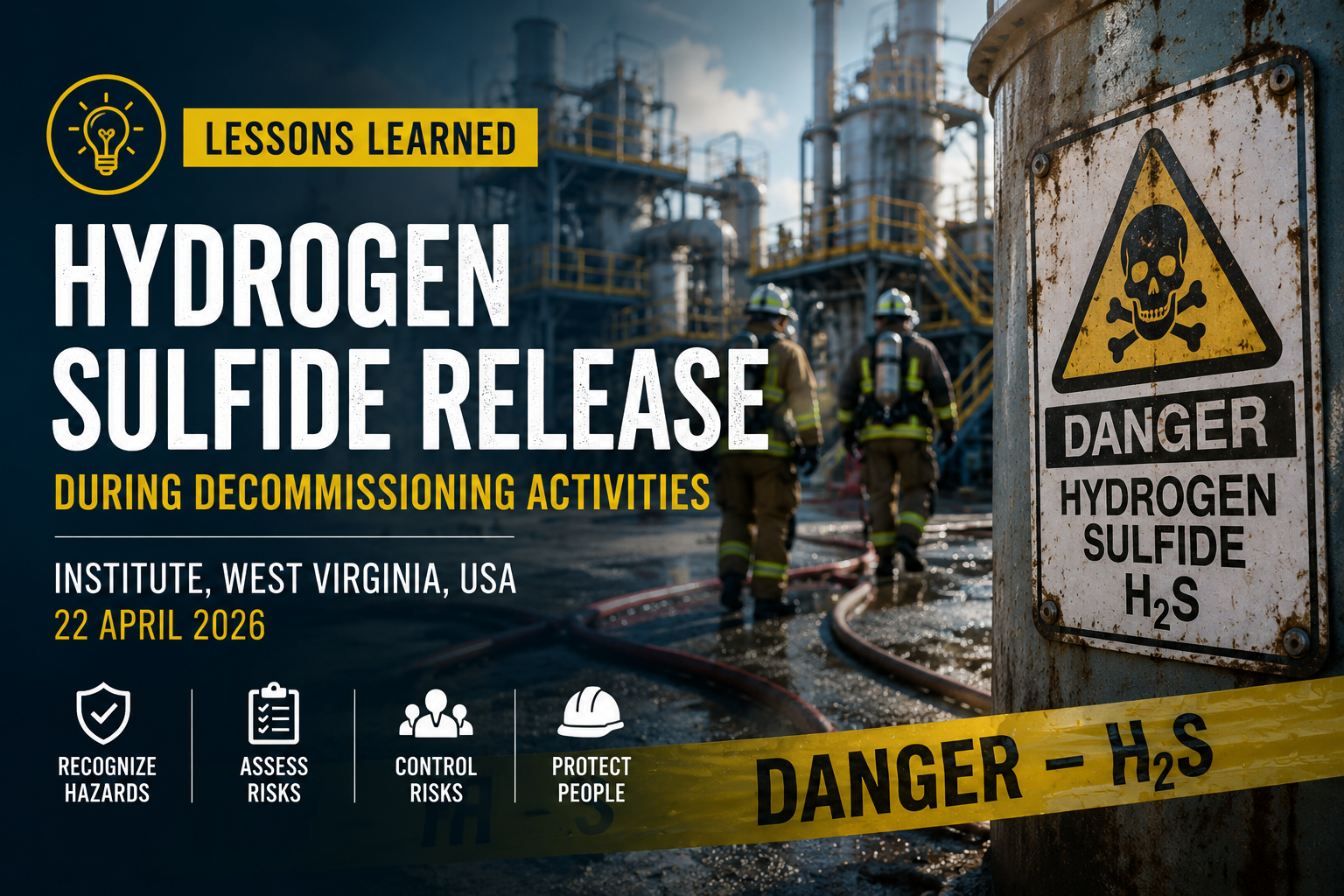
On 22 April 2026, two workers were killed and more than 20 others were affected following the release of hydrogen sulfide (H₂S) during decommissioning and cleaning operations at an industrial facility in Institute, West Virginia, USA. Preliminary reports indicate that a chemical reaction involving nitric acid and residual process materials generated large quantities of toxic gas, exposing workers in the immediate vicinity.
Although the official investigation is still ongoing, the incident highlights the significant hazards associated with non-routine work, chemical incompatibility, management of change, maintenance planning and emergency preparedness. Many of the lessons extend well beyond the chemical sector and are directly relevant to manufacturing, utilities, mining, construction, pharmaceuticals, food processing and other industries that undertake cleaning, shutdown or decommissioning activities.
Incident Overview
During planned decommissioning activities, personnel were engaged in cleaning and preparing equipment for shutdown. A reaction involving nitric acid and residual substances reportedly produced hydrogen sulfide gas.
The release resulted in multiple casualties before emergency responders secured the area and implemented protective measures.
At the time of publication, the precise sequence of events and underlying technical causes remain subject to official investigation.
What is Hydrogen Sulfide?
Hydrogen sulfide (H₂S) is a colourless, highly toxic and flammable gas that is commonly encountered in industries such as oil and gas, chemical processing, wastewater treatment and mining. Although it is often associated with a “rotten egg” smell, exposure can quickly deaden the sense of smell, making it impossible to rely on odour as a warning. Even brief exposure to high concentrations can cause rapid collapse, respiratory failure and death.
In the oil and gas industry, H₂S is frequently found in sour crude oil and natural gas reservoirs and may be released during drilling, production, refining, tank cleaning or maintenance activities. It can also be generated by certain chemical reactions or the decomposition of sulphur-containing materials.
Immediate Factors
Based on available information, several direct contributors may have been present:
- Introduction of incompatible chemicals during cleaning or decommissioning.
- Generation of hydrogen sulfide through an unintended chemical reaction.
- Worker exposure to a rapidly developing toxic atmosphere.
- Limited opportunity for escape once hazardous concentrations developed.
- Non-routine work activities creating conditions outside normal operating assumptions.
Underlying Organisational Factors
Planning for Non-Routine Activities
Many organisations devote significant resources to controlling routine production risks while underestimating hazards associated with shutdowns, maintenance or demolition activities.
Tasks involving cleaning, dismantling or disposal often involve altered equipment configurations, residual chemicals and changing responsibilities that increase uncertainty.
Chemical Knowledge and Compatibility
Cleaning agents may appear benign when considered individually but can become highly hazardous when mixed with residues or other process chemicals.
Failure to identify incompatible substances before work commences can result in toxic gas generation, fire, explosion or violent reactions.
Hazard Identification
Traditional risk assessments may focus on mechanical hazards while overlooking atmospheric hazards created by process chemistry.
Effective planning requires systematic evaluation of all potential reactions, including those involving contaminants or residual deposits.
Management of Change
Transitioning from production to shutdown frequently changes process conditions, staffing arrangements and operating procedures.
Without formal review and approval, assumptions that were valid during normal operation may no longer remain appropriate.
Permit-to-Work and Work Authorisation
Permits should ensure that all chemical hazards have been assessed before introducing cleaning agents or opening process equipment.
Verification steps should include chemical inventories, isolation status, atmospheric monitoring requirements and emergency arrangements.
Competence and Training
Personnel conducting decommissioning work require sufficient understanding of process chemistry and toxic gas hazards.
Contractors or temporary workers unfamiliar with facility-specific risks may be particularly vulnerable.
Emergency Preparedness
Hydrogen sulfide can incapacitate individuals within seconds at high concentrations, leaving little opportunity for self-rescue.
Emergency plans should therefore prioritise prevention, rapid detection and controlled response rather than relying solely on rescue capability.
Potential Systemic Weaknesses
Although not confirmed in this incident, investigations into similar events have frequently identified:
- Inadequate review of chemical compatibility.
- Insufficient hazard analysis for maintenance activities.
- Poor communication between engineering, operations and contractors.
- Failure to recognise residual hazards within supposedly empty equipment.
- Incomplete documentation during shutdown planning.
- Lack of continuous gas monitoring.
- Overreliance on historical experience rather than formal risk assessment.
Key Lessons for Industry
Non-Routine Work Often Presents the Highest Risk
Shutdowns, maintenance and decommissioning frequently involve changing conditions and incomplete information. These activities deserve at least the same level of planning and oversight as routine production.
Residual Chemicals Can Be Dangerous
Equipment believed to be empty may still contain deposits capable of reacting violently with cleaning agents or introduced chemicals.
Atmospheric Hazards Can Develop Rapidly
Toxic gases such as hydrogen sulfide may accumulate without visible warning. Continuous monitoring and effective ventilation are essential where credible exposure risks exist.
Chemical Compatibility Must Be Verified
Every cleaning chemical should be assessed against known process materials, contaminants and residues before use.
Effective Communication Prevents Accidents
Operations personnel, engineers, contractors and supervisors should share a common understanding of the planned work, hazards and contingency arrangements.
Emergency Response Depends on Preparation
Workers must know evacuation procedures, alarm systems and exclusion zones before work begins, as rescue opportunities may be extremely limited.
Recommendations Applicable Across Industries
- Establish formal planning processes for all shutdown, maintenance and decommissioning activities.
- Require documented chemical compatibility reviews before introducing cleaning agents or reactive substances.
- Expand risk assessments to include potential toxic gas generation and secondary chemical reactions.
- Implement robust management of change procedures whenever operating conditions or processes are altered.
- Strengthen permit-to-work systems to address chemical hazards, atmospheric risks and residual contamination.
- Verify that equipment has been isolated, drained, cleaned and tested before maintenance begins.
- Deploy appropriate gas detection systems wherever hazardous atmospheres may develop.
- Ensure workers and contractors receive training on process-specific chemical hazards rather than relying solely on generic induction programmes.
- Conduct pre-job briefings that review hazards, emergency arrangements and communication protocols.
- Maintain effective ventilation during cleaning and confined-space operations where practicable.
- Regularly review emergency response plans for toxic gas releases and ensure responders understand the risks of secondary exposure.
- Encourage workers to stop work immediately if unexpected reactions, odours or atmospheric conditions are encountered.
- Capture and share lessons learned from maintenance and decommissioning activities across sites and business units.
- Periodically audit chemical inventories, safety data sheets and compatibility information to ensure they remain current and accessible.
- Foster a reporting culture where concerns about non-routine work can be raised without fear of reprisal.
Conclusion
While investigators continue to determine the precise causes of the hydrogen sulfide release, the incident serves as a powerful reminder that catastrophic events often occur during non-routine activities rather than normal operations.
Comprehensive planning, chemical hazard awareness, effective management of change, disciplined permit systems and robust emergency preparedness remain essential safeguards across all industries. Organisations that proactively address these areas can significantly reduce the likelihood of similar incidents and better protect workers, contractors and surrounding communities.
Disclaimer
This article has been prepared using publicly available information, including official reports, media coverage and other credible sources available at the time of publication. In some cases, reasonable assumptions and professional judgement have been applied where complete or verified information is not yet available, particularly where official investigations remain ongoing.
The analysis, observations and recommendations presented are intended solely for educational and informational purposes to promote discussion and improve workplace safety. They should not be interpreted as definitive findings, legal advice, regulatory guidance or professional engineering or safety advice. Readers should undertake their own risk assessments and seek appropriate professional or legal advice before relying on any information contained in this publication.
© 2026 World Safety News. All rights reserved.
This publication and its contents are protected by copyright law. No part of this document may be reproduced, distributed, transmitted or published in any form without prior written permission from World Safety News, except for brief quotations used for non-commercial purposes with appropriate attribution.