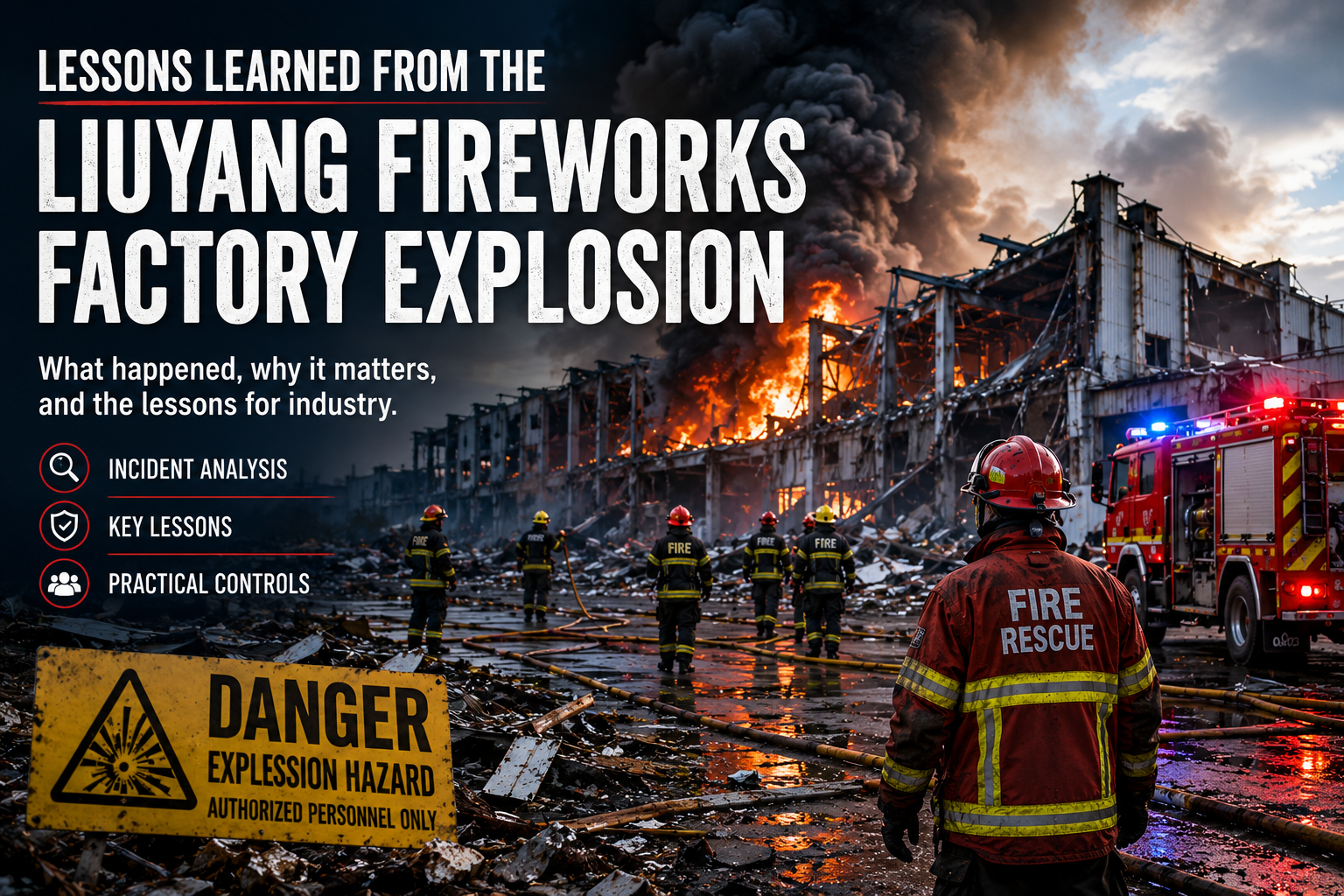
Liuyang Fireworks Factory Explosion — Hunan Province, China
4 May 2026
On 4 May 2026, a catastrophic explosion occurred at the Huasheng Fireworks Manufacturing and Display Company facility in Liuyang, Hunan Province, China — an area widely regarded as the country’s “fireworks capital.” Initial reports confirmed at least 26 fatalities and 61 injuries, with the final death toll later rising to 37 people, making it one of China’s deadliest industrial explosions in recent years.
The explosion reportedly occurred at approximately 4:40 pm local time inside a workshop area of the facility. Multiple secondary explosions followed after fireworks products and semi-finished pyrotechnic materials ignited across the site. The blast flattened buildings, uprooted trees, shattered windows in nearby villages, and scattered debris over a wide area.
Rescue operations were significantly complicated by the presence of highly combustible black powder stored in warehouse areas near the explosion site. Authorities deployed more than 1,500 emergency responders, including firefighters, rescue personnel, drones, robots, and specialist response teams. Nearby residents were evacuated due to concerns about further explosions and environmental hazards.
Although the official cause remains under investigation, several contributing risk factors have already emerged from media and regulatory reporting. Investigators confirmed the company had previously been cited for safety violations, including the dangerous mixing of reducing agents and oxidisers within workshop areas — a practice known to significantly increase ignition and explosion risk in pyrotechnic manufacturing. Reports also identified substantial quantities of explosive materials and semi-finished products stored throughout the facility, which likely intensified the scale and duration of the blast.
The incident has again highlighted longstanding concerns regarding process safety management within high-hazard manufacturing sectors. Fireworks production presents unique operational risks due to the sensitivity of explosive compounds to friction, impact, heat, static electricity, contamination, and poor segregation controls. The repeated occurrence of similar incidents in China and elsewhere suggests that failures involving hazardous material storage, supervision, housekeeping, and operational discipline remain significant industry-wide concerns.
The Chinese government responded rapidly following the incident. President Xi Jinping ordered a full investigation and called for strict accountability for those responsible. Authorities suspended operations at all fireworks manufacturing facilities within Liuyang while emergency inspections and wider safety reviews were undertaken. The company’s management was detained by police, and China’s State Council established a formal investigation team to examine both the immediate causes and potential regulatory failures associated with the disaster.
Beyond the tragic loss of life, the explosion has had broader operational and economic implications. Liuyang produces approximately 60% of China’s domestic fireworks supply and around 70% of exports globally, meaning the temporary shutdown of regional factories may significantly disrupt international supply chains. The incident has also increased scrutiny on hazardous manufacturing industries across China, particularly regarding emergency preparedness, regulatory oversight, and process safety compliance.
Key Lessons & Recommendations for Other Businesses
Businesses involved in hazardous manufacturing, chemical handling, explosive materials, or combustible dust processes should consider the following risk reduction measures:
1. Hazardous Material Segregation
- Separate incompatible substances.
- Maintain strict storage zoning.
- Minimize quantities held within production areas.
2. Process Safety Management (PSM)
- Implement formal PSM systems for high-risk operations.
- Conduct regular hazard and operability (HAZOP) reviews.
- Establish management-of-change procedures.
3. Housekeeping & Combustible Material Control
- Prevent accumulation of combustible dusts and residues.
- Maintain strict cleaning and waste removal routines.
4. Explosion Protection & Engineering Controls
- Install blast-resistant barriers where appropriate.
- Introduce automated handling systems to reduce worker exposure.
- Implement explosion venting and suppression systems.
5. Emergency Preparedness
- Develop realistic evacuation and emergency response plans.
- Conduct drills regularly.
- Establish exclusion zones around hazardous storage areas.
6. Safety Culture & Supervision
- Strengthen frontline supervision.
- Encourage hazard reporting and intervention.
- Prevent normalization of unsafe shortcuts or deviations.
7. Regulatory Compliance & Auditing
- Conduct independent safety audits.
- Immediately address previous violations and near misses.
- Ensure corrective actions are tracked and verified.
8. Training & Competency
- Provide specialized training for hazardous material handling.
- Reinforce ignition source awareness and static control measures.
- Verify competency before authorizing workers in high-risk areas.
Conclusion
The Liuyang explosion serves as a stark reminder that catastrophic industrial incidents are rarely the result of a single failure. Instead, they often emerge from a combination of unsafe storage practices, inadequate process controls, regulatory weaknesses, and operational complacency. For organisations operating high-risk processes, this incident reinforces the importance of robust process safety management, disciplined operational controls, and proactive hazard prevention systems designed to prevent small failures escalating into mass-casualty events.
Leave a Reply