Category: Lessons Learned

Deep Dive Articles with lessons learned

  • Lessons Learned: When Stored Energy Becomes the Hazard

    Lessons Learned: When Stored Energy Becomes the Hazard

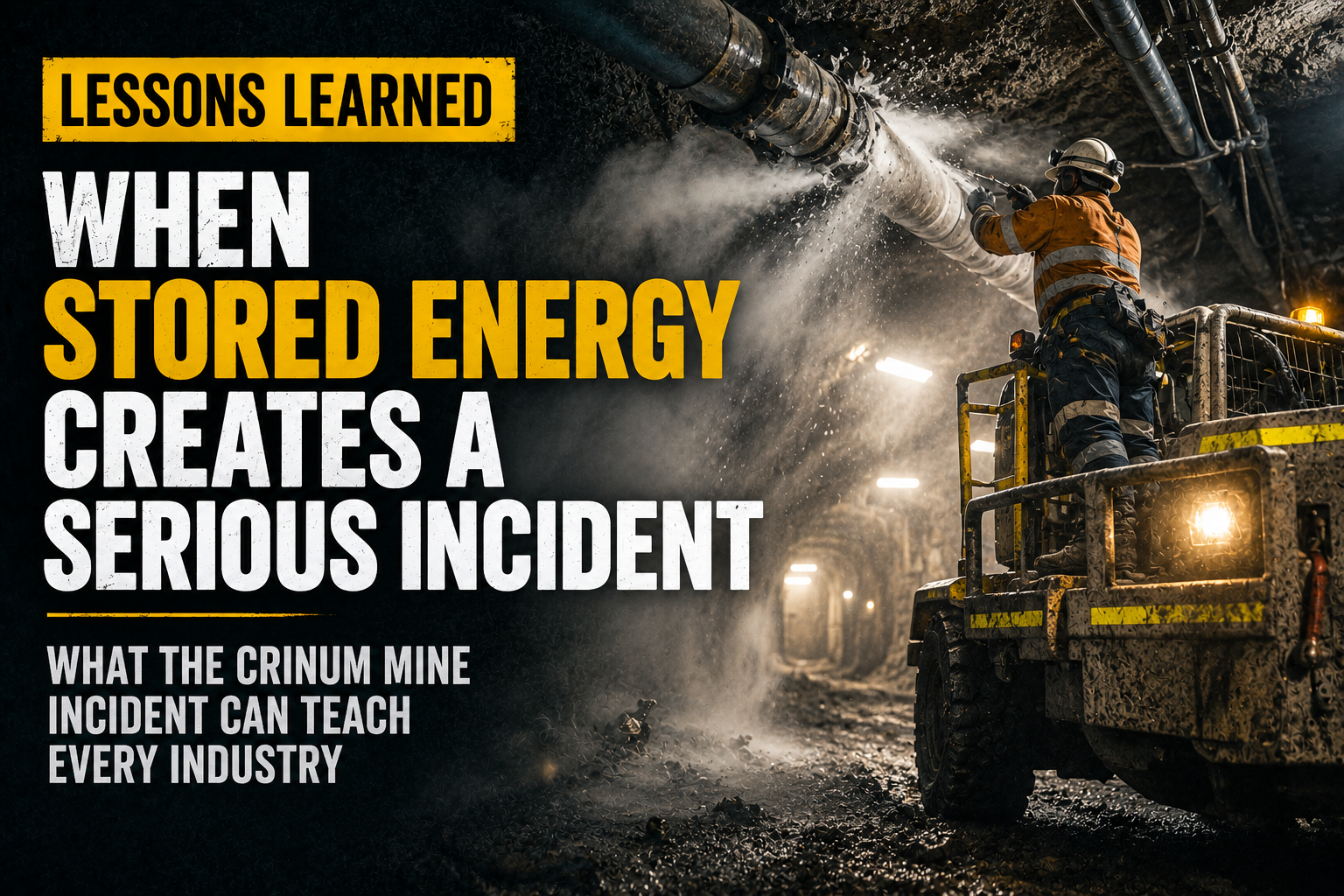
    What the Crinum Mine incident can teach every industry about isolation, line of fire and changing conditions

    On 12 September 2026, a worker at the Crinum underground coal mine in Queensland sustained life-threatening injuries during maintenance work involving a pressurised compressed-air pipeline. What began as maintenance on a pipe assembly developed into a sequence involving stored energy, a sudden release of compressed air, reduced visibility, a fall from a mobile vehicle and subsequent contact between the worker and that vehicle.

    The worker, a 71-year-old man, suffered significant injuries to his chest, face, arms and abdomen. He was initially taken to Emerald Hospital before being transferred to Rockhampton Hospital and then flown to the Royal Brisbane and Women’s Hospital in Brisbane in a critical condition. A subsequent report said he required surgery to his jaw and that his condition was improving. Further details about the full extent of his injuries and his recovery have not been publicly released.

    Resources Safety and Health Queensland (RSHQ) issued a Safety Alert following the incident, stating that the precise sequence of events and circumstances remained subject to investigation and verification. The regulator’s preliminary information provides enough detail, however, to examine a set of hazards that exists in almost every industry: stored energy, isolation, line-of-fire exposure, work positioning and interaction with mobile equipment.

    That is what makes the Crinum incident particularly valuable as a safety case study. The lesson is not simply about compressed air or underground mining. It is about what can happen when one unexpected release of energy changes the conditions around a worker and allows several hazards to interact.

    What happened?

    According to RSHQ’s preliminary account, the worker was undertaking maintenance on a pressurised compressed-air pipeline system. He was standing on the front bumper bar of a drift runner — a heavy-duty utility vehicle used to transport workers and materials — to access the pipework.

    While the worker was tightening a clamp, the pressurised clamp and pipe assembly reportedly failed. The failure released compressed air, creating significant dust and reducing visibility. The worker subsequently fell from the front of the drift runner.

    RSHQ says that, for reasons yet to be determined, the operator of the drift runner then moved the vehicle and it made contact with the fallen worker. The worker suffered serious injuries. The investigation into the precise sequence and circumstances remains ongoing.

    The important point is that the eventual injury was not the result of one isolated hazard. There was pressure energy within the compressed-air system. There was the physical exposure created by the worker’s position on the vehicle. There was gravitational energy associated with the elevated position. There was the sudden release of compressed air and the resulting loss of visibility. And there was mechanical energy associated with the movement of the drift runner.

    The incident became serious because those hazards interacted.

    The first question: Why was the system capable of releasing energy?

    Compressed air is one of the most familiar utilities in industry. It is used for tools, instrumentation, cleaning, conveying, control systems and countless other applications. Its familiarity can make it easy to underestimate.

    Compressed air is stored energy. Until that energy has been positively isolated and released or otherwise controlled, the system can remain capable of causing serious harm.

    RSHQ’s guidance following the incident specifically tells mine operators to verify that effective controls are in place for work involving pressurised systems and stored energy. Its broader guidance also emphasises the need to isolate and depressurise pressurised systems before maintenance and to verify that the energy has been removed.

    The principle is universal. A hydraulic accumulator can contain stored pressure. A steam line can contain heat and pressure. A pneumatic cylinder can move unexpectedly. A suspended load contains gravitational potential energy. An electrical capacitor can remain energised after equipment has been switched off. A rotating flywheel can continue to store kinetic energy after its drive has stopped.

    The critical question is therefore not simply:

    “Has the equipment been switched off?”

    It is:

    “What energy could still be present, and how do we know that it has been made safe?”

    Isolation is not the same as switching off

    One of the recurring weaknesses in maintenance work across many industries is the assumption that stopping equipment means the equipment has been made safe.

    A valve may be closed while pressure remains downstream. A circuit breaker may be open while another energy source remains connected. A hydraulic system may have stopped moving while pressure remains trapped within the system. A machine may be stationary while gravity, stored tension or another mechanical force remains capable of producing movement.

    Effective isolation therefore needs to address the complete energy pathway. The source needs to be identified and isolated. Stored energy needs to be dissipated, restrained or otherwise controlled. And, critically, the absence of hazardous energy needs to be verified.

    Verification is the step that turns an assumption into evidence.

    The second question: Where was the worker positioned?

    RSHQ’s preliminary information indicates that the worker was standing on the front bumper bar of the drift runner to access the pipework. The regulator subsequently advised mine operators to ensure that suitable work platforms are used and that mobile equipment is not used for that purpose.

    This is an important part of the story because work positioning can determine how a person is exposed when something goes wrong. The worker was not simply beside a pressurised pipe. He was positioned on a mobile vehicle, close to the component being worked on.

    When the pipe assembly reportedly failed, the consequences extended beyond the pressure release itself. Dust was generated, visibility was reduced, the worker fell and the vehicle subsequently made contact with him.

    This illustrates a broader principle:

    A work method should be assessed not only for whether it allows a task to be completed, but for what happens if the task does not go according to plan.

    A worker may be able to reach a component by standing on a vehicle, climbing onto machinery or working from an improvised position. But if the component fails, what happens next? Where does the worker go? Where does the released energy go? What happens to the equipment? And what happens if visibility disappears?

    The third question: What happened when conditions changed?

    Perhaps the most important lesson from the incident is what happened immediately after the component reportedly failed.

    The release of compressed air created significant dust and reduced visibility. The environment had changed. The task that existed seconds earlier was no longer the same task. This is a critical point in maintenance safety.

    Risk assessments, job safety analyses and work procedures are generally developed around an anticipated sequence of events. But real work is dynamic. Components fail. Conditions change. Unexpected noises occur. Equipment moves. Pressure changes. Visibility disappears. A robust safety system therefore needs a mechanism for recognising when the original risk assessment is no longer valid.

    RSHQ’s Safety Alert specifically tells workers to identify hazards, assess risks and verify that controls remain effective before commencing work and whenever conditions change. That principle applies whether the workplace is a mine, refinery, factory, warehouse, construction site, power station or transport depot. When conditions change significantly, the correct response may be to stop the task, withdraw to a safe position and reassess.

    The chain matters more than the individual event

    It would be easy to focus on the pipe failure, but consider the sequence more broadly:

    Pressurised system → component failure → uncontrolled release of energy → dust and reduced visibility → worker falls → mobile equipment moves → worker is struck.

    Each event changed the conditions for what followed. If the system had been fully isolated and depressurised, the pipe failure would not have had the same energy available to release. If the worker had been positioned on a suitable work platform, the consequences of the sudden release may have been different. If the vehicle had been positively isolated against movement while the maintenance task was being performed, the subsequent interaction may not have occurred. If the worker and vehicle had been physically separated, the fall and vehicle movement would not necessarily have resulted in contact.

    This is why high-consequence risk management should not depend on one control. A strong system uses multiple layers of protection so that if one control fails, another prevents the event from escalating.

    The importance of line of fire

    “Line of fire” is sometimes used as a simple safety slogan. The Crinum incident illustrates why it should be treated as a practical risk-management concept. A line of fire exists wherever a person could be struck by released energy, moving equipment, falling objects, pressure, stored force or another uncontrolled physical effect.

    For pressurised systems, the line of fire may include the direction in which a component could move or rupture. For mobile equipment, it includes the machine’s movement envelope. For suspended loads, it includes the area beneath or around the load. For electrical systems, it can include the area affected by an arc or electrical contact.

    The objective is not simply to warn workers about these zones. Where reasonably practicable, the system of work should keep people out of them.

    What underlying conditions should organisations examine?

    The investigation at Crinum will determine which factors actually contributed to the event. It would be inappropriate at this stage to declare particular management failures as established facts. The incident nevertheless provides an opportunity for other organisations to examine their own systems.

    The first area is stored-energy management.

    Do maintenance procedures identify all relevant energy sources? Are isolation points clearly defined? Can the system be depressurised? Is residual energy accounted for? Is isolation locked and controlled? Can the zero-energy state be verified?

    The second is work positioning.

    Does the task require workers to climb onto machinery, vehicles or structures to gain access? If so, is that the intended method of work, or has a workaround become normal?

    The third is mobile-plant interaction.

    Can a vehicle or machine move while someone is working on or beside it? If movement is possible, what prevents it? Is the isolation controlled by the person exposed to the hazard?

    The fourth is line of fire.

    If a component fails, where will the energy go? Where will the worker move? Where could equipment move? Could a person instinctively move into another hazard while trying to escape the first one?

    The fifth is change management at the task level.

    What happens when the job doesn’t proceed as expected? Does the work procedure require a stop and reassessment? Do workers have the authority to stop? Does the work environment make it practical to withdraw safely?

    A serious incident does not need a complex cause to have complex consequences

    One of the useful lessons from Crinum is that the initiating event does not have to be particularly complicated.

    A clamp and pipe assembly reportedly failed. That single event then interacted with the way the work had been positioned and the presence of mobile equipment.

    This is a common feature of serious incidents. The component that fails may be relatively simple. The consequences become severe because the surrounding system has allowed several hazards to interact.

    This is why safety professionals should examine interfaces, not just individual hazards.

    The interface between maintenance and operations.

    The interface between people and mobile plant.

    The interface between stored energy and access.

    The interface between a changing environment and a fixed risk assessment.

    These interfaces are often where controls become weakest.

    Universal recommendations

    1. Identify every source of stored energy

    Before maintenance or intervention begins, identify pressure, electrical energy, hydraulic energy, pneumatic energy, gravity, heat, mechanical movement, stored tension and any other energy capable of causing harm. Do not assume that because the primary machine is switched off, all hazardous energy has disappeared.

    2. Isolate and verify

    Isolation should prevent hazardous energy from reaching the work area. Stored energy should then be dissipated, restrained or otherwise controlled. Finally, verify the zero-energy condition before work begins. The verification step should be practical and observable rather than simply relying on someone stating that the system is isolated.

    3. Keep people outside the line of fire

    Where possible, design the task so that workers do not occupy the area into which energy could be released. If the hazard cannot be eliminated, consider engineering controls such as barriers, remote operation, physical separation or other means of preventing exposure.

    4. Provide a suitable means of access

    Workers should not need to improvise access to complete routine maintenance. If a task requires elevated access, provide a suitable work platform. If the equipment cannot safely be used as a work platform, the system should make that clear and provide an alternative.

    5. Physically control mobile equipment

    Where maintenance workers are exposed to mobile plant, ask whether the equipment can be physically prevented from moving. Communication and awareness remain important, but physical isolation is generally more reliable than relying on people to anticipate one another’s actions.

    6. Design for unexpected failure

    Do not assess the task only under normal conditions. Ask what happens if:

    • the component breaks;
    • pressure is released;
    • a hose ruptures;
    • visibility disappears;
    • a machine moves;
    • a worker falls;
    • a load shifts; or
    • someone reacts instinctively to an unexpected event.

    The resulting answers can reveal hazards that a conventional task assessment may overlook.

    7. Stop when conditions change

    An unexpected event should be treated as a trigger to reassess. A change in pressure, unexpected movement, unusual noise, loss of visibility or component failure can invalidate the assumptions on which the original task assessment was based. Stopping is not a failure of the job. Sometimes stopping is the control.

    8. Make critical controls visible

    High-consequence controls should be clearly identified. Workers and supervisors should be able to determine whether those controls are actually present before the task proceeds. This is particularly important for isolation, exclusion zones, access equipment and mobile-plant controls.

    9. Give workers a genuine stop-work authority

    Workers need both the authority and the practical ability to stop a task when conditions become unsafe. That authority needs to be supported by supervisors and management. A system in which workers technically have “stop-work authority” but are discouraged from using it is not an effective control.

    10. Examine interactions, not just individual hazards

    The Crinum event demonstrates why risk assessments should ask more than:

    “What are the hazards?”

    They should also ask:

    “What happens if these hazards interact?”

    Pressure plus access. Access plus mobile plant. A fall plus moving equipment. An unexpected release plus reduced visibility. It is often the interaction between hazards that produces the serious outcome.

    What happened afterwards?

    Following the incident, RSHQ directed that the scene be isolated and that certain operations be suspended until they could be performed at an acceptable level of risk. The regulator subsequently lifted the directive to suspend particular operations, and Sojitz Blue began a staged recommencement of activity at the Crinum underground mine while the detailed investigation continued.

    That sequence is important. A serious incident does not automatically mean that every activity at a site must remain suspended indefinitely. Equally, resuming operations does not mean that the investigation is complete or that every causal question has been answered.

    The important principle is that work should only recommence where the relevant controls have been reviewed and the regulator and operator are satisfied that the affected activities can be performed at an acceptable level of risk.

    The broader lesson

    The Crinum incident is a reminder that stored energy is not simply an engineering problem. It is a management problem.

    Every industry has its equivalent of the pressurised compressed-air pipeline. It might be a hydraulic accumulator in a manufacturing plant. A steam line in a power station. An electrical distribution system on a construction project. A suspended load in a warehouse. A compressed-gas cylinder in a laboratory. A tensioned component in a transport system. The energy may be invisible. The controls cannot be.

    The safest maintenance task is not necessarily the one with the longest procedure. It is the one where the organisation can demonstrate that the energy has been identified, the hazardous state has been controlled, the worker is positioned outside the credible line of fire and the equipment cannot unexpectedly interact with the person performing the work.

    The investigation at Crinum will ultimately determine how the incident developed and which controls were effective or ineffective. Until those findings are available, it would be inappropriate to assign responsibility or draw conclusions about individual decisions. Organisations do not need to wait for the final investigation to examine their own exposure.

    Where is our stored energy?

    How do we isolate it?

    How do we prove it is isolated?

    Where would the energy go if something failed?

    And what happens if the conditions suddenly change?

    Those questions are relevant in almost every workplace.

    Regulatory source

    Resources Safety and Health Queensland — Safety Alert No. 485, 14 September 2026

    Serious accident involving a pressurised compressed-air system and mobile equipment — RSHQ

    The RSHQ alert remains the principal regulatory source for this incident. It states that the precise sequence and circumstances remain subject to investigation and verification, and provides specific guidance concerning stored energy, pressurised systems, suitable work platforms, mobile equipment and reassessment when conditions change.

    Disclaimer

    This article has been prepared by World Safety News for general information, learning and safety-awareness purposes. It is not a substitute for professional safety, engineering, legal or regulatory advice. The circumstances surrounding the Crinum mine incident remain subject to investigation, and information available at the time of publication may change as further evidence becomes available. References to possible contributing factors, control weaknesses or safety considerations in this article should not be interpreted as findings about the incident, its causes or the conduct of any individual or organisation. Organisations should assess their own risks and controls in accordance with applicable legislation, standards, manufacturer requirements and competent professional advice.

  • Lessons Learned: When Maintenance Creates New Hazards

    Lessons Learned: When Maintenance Creates New Hazards

    Not every important safety lesson comes from yesterday’s headlines. While World Safety News regularly reports on current workplace incidents, some of the most valuable opportunities for learning come from revisiting major events after investigations have progressed and more information has become available.

    Although the explosion at the U.S. Steel Clairton Coke Works occurred in August 2025, the findings continue to provide important reminders for any organisation undertaking maintenance, shutdowns or other non-routine work.

    The purpose of the Lessons Learned series is to look beyond the immediate news cycle and examine the organisational, operational and leadership factors that contribute to serious incidents. By reflecting on these events with the benefit of hindsight, organisations can identify practical lessons that remain just as relevant today as they were on the day the incident occurred.

    Executive Summary

    Maintenance is one of the most important activities undertaken in any industrial workplace. It restores equipment, improves reliability, replaces worn components and helps prevent failures that could otherwise place workers at risk. Yet history repeatedly demonstrates that maintenance activities themselves can introduce significant hazards if they are not carefully planned and controlled.

    In August 2025, two workers were killed and eleven others injured following an explosion at the U.S. Steel Clairton Coke Works in Pennsylvania, USA. Subsequent regulatory investigations identified numerous deficiencies relating to maintenance planning, work procedures and hazard management. Although the incident occurred within the steel industry, the lessons extend far beyond coke production. Every organisation that isolates equipment, modifies plant, performs shutdown work or returns systems to service faces similar challenges.

    This article examines the broader organisational lessons arising from the incident and explores why maintenance should never be regarded as routine work.

    Incident Overview

    On 11 August 2025, workers were undertaking maintenance activities at the U.S. Steel Clairton Coke Works when an explosion occurred during work associated with a coke oven gas system.

    Two workers tragically lost their lives and eleven others were injured.

    The Occupational Safety and Health Administration (OSHA) subsequently investigated the incident and issued multiple citations, concluding that deficiencies existed in work procedures, hazard recognition and maintenance practices. At the time of writing, investigations by the U.S. Chemical Safety and Hazard Investigation Board (CSB) continue to examine the broader organisational and technical factors that contributed to the explosion.

    While the final sequence of events remains under investigation, sufficient information is available to examine several organisational themes that are common to major maintenance-related incidents across many industries.

    Scope and Limitations

    This article has been prepared using publicly available information, including regulatory announcements, media reporting and official statements available at the time of publication. The CSB investigation remains ongoing and additional findings may become available.

    Accordingly, this analysis does not attempt to determine the precise technical cause of the explosion or attribute responsibility to any individual or organisation. Instead, it considers broader organisational factors and recognised good practice relating to maintenance management, work planning and the control of major hazards.

    Maintenance Changes the Risk Profile

    Maintenance is often viewed as a means of reducing risk. Worn equipment is repaired, damaged components are replaced and systems are restored to a safe operating condition. While these outcomes are essential, the maintenance process itself temporarily changes the way a facility operates.

    Equipment that normally contains hazardous materials may be opened. Pipework is disconnected. Safety systems may be isolated to allow testing or replacement. Temporary arrangements are introduced, and workers perform tasks that are infrequent, technically demanding and often undertaken in close proximity to hazardous energy sources.

    These changes mean that the hazards encountered during maintenance are often very different from those associated with routine production. A plant that operates safely for years under normal conditions may become significantly more vulnerable while maintenance activities are underway.

    Recognising this changing risk profile is one of the fundamental challenges of effective maintenance management.

    Looking Beyond the Immediate Cause

    Major industrial incidents are rarely explained by a single failure. Although investigations may ultimately identify a technical initiating event, the circumstances that allow an incident to develop are often rooted in decisions made long before work begins.

    Maintenance work requires organisations to coordinate engineering, operations, supervision, contractors, permit systems, isolation procedures and emergency preparedness. When these elements work together effectively, maintenance can be completed safely even in high-hazard environments. When weaknesses develop across several of these areas simultaneously, however, opportunities for unexpected interactions increase significantly.

    For this reason, organisations should avoid viewing maintenance incidents as isolated procedural failures. They are more often indicators of weaknesses within the broader management system.

    Planning Is More Than Scheduling Work

    One of the most common misconceptions surrounding maintenance is that planning simply involves deciding when work will occur.

    In reality, effective maintenance planning begins by understanding how the work changes the facility’s risk profile.

    Questions organisations should consider include:

    • What hazardous energy will be exposed?
    • What systems will be unavailable?
    • What temporary conditions will exist?
    • How will work activities interact?
    • What could go wrong if assumptions prove incorrect?

    These questions encourage organisations to move beyond task planning and towards genuine hazard anticipation.

    Assumptions Can Become Hidden Hazards

    Routine maintenance often creates a false sense of familiarity.

    Workers may perform similar tasks dozens or even hundreds of times throughout their careers. Equipment becomes familiar, procedures become well practised and unusual conditions gradually begin to feel routine.

    This familiarity can unintentionally encourage assumptions to replace verification.

    A valve is assumed to be isolated.

    A line is assumed to be depressurised.

    A permit is assumed to reflect current conditions.

    A process is assumed to remain unchanged.

    Major incidents frequently occur not because these assumptions are unreasonable, but because they are never independently confirmed.

    Verification remains one of the most powerful controls available to organisations undertaking maintenance work.

    Maintenance Is a Team Activity

    Modern industrial maintenance rarely involves one individual working alone.

    Operators, engineers, maintenance personnel, contractors, supervisors and control room staff often perform interconnected activities simultaneously.

    Each group may have only part of the overall picture.

    Without clear communication and coordination, individually safe decisions can combine to produce unintended consequences.

    Effective maintenance management therefore depends as much on communication and shared situational awareness as it does on technical competence.

    Temporary Conditions Often Become the Greatest Risk

    One characteristic shared by many major industrial incidents is that they occur during temporary operating conditions rather than routine production.

    Temporary pipework.

    Temporary isolations.

    Temporary bypasses.

    Temporary procedures.

    Temporary staffing arrangements.

    Each temporary change introduces additional complexity.

    The challenge for organisations is ensuring that temporary conditions receive the same level of scrutiny as permanent plant.

    Temporary should never mean lower standards.

    Learning Beyond Compliance

    Regulatory investigations often identify breaches of legislation or procedural deficiencies.

    These findings are important, but organisations seeking genuine improvement should ask a different question.

    Rather than asking:

    Which regulation was breached?

    They should ask:

    What assumptions within our own organisation could produce similar conditions?

    This shift changes maintenance from a compliance exercise into an opportunity for organisational learning.

    Recommendations Applicable Across Industries

    Organisations undertaking maintenance activities should consider the following good practices:

    • Recognise maintenance as a high-risk operational phase requiring structured planning and leadership oversight.
    • Review how maintenance activities alter the facility’s risk profile rather than focusing solely on the task itself.
    • Independently verify all isolations, depressurisation activities and safety-critical controls before commencing work.
    • Ensure temporary modifications, bypasses and alternative operating arrangements are formally assessed and documented.
    • Confirm that permit-to-work systems accurately reflect current site conditions.
    • Strengthen communication between operations, engineering, contractors and supervisors throughout maintenance activities.
    • Encourage workers to question assumptions and verify conditions before relying on previous experience.
    • Review emergency response arrangements for maintenance-specific hazards.
    • Capture lessons learned following major maintenance activities and incorporate them into future planning.
    • Periodically audit maintenance management systems to identify organisational weaknesses before incidents occur.

    Key Takeaways

    • Maintenance fundamentally changes how a facility operates and should be treated as a distinct high-risk activity.
    • Many maintenance-related incidents result from multiple organisational weaknesses rather than a single technical failure.
    • Verification is often more important than assumption, particularly where hazardous energy is involved.
    • Temporary operating conditions deserve the same level of planning and oversight as normal production.
    • Effective communication between all parties involved in maintenance is essential for maintaining control of risk.
    • Organisations should use maintenance activities as opportunities to strengthen learning rather than simply restore equipment.

    Final Thoughts

    The explosion at the Clairton Coke Works serves as a reminder that maintenance is not simply about repairing equipment—it is about managing change. Every isolation, inspection, replacement and temporary modification alters the way a facility operates, often introducing hazards that are absent during normal production. Recognising these changes and responding to them systematically is fundamental to preventing major incidents.

    For health and safety professionals, perhaps the most enduring lesson is that maintenance should never be viewed as routine simply because it is scheduled. It represents a period of heightened organisational complexity, where assumptions must give way to verification, communication becomes critical and leadership is measured not by how quickly work is completed, but by how effectively risks are anticipated and controlled.

  • Lessons Learned – Las Raffan Exposion

    Lessons Learned – Las Raffan Exposion

    Executive Summary

    On 21 June 2026, an explosion occurred at the Barzan Gas Processing Facility within Ras Laffan Industrial City, Qatar, during the recommissioning of operations following an extended shutdown. Thirteen workers lost their lives and dozens more were injured. Authorities have confirmed that investigations remain ongoing and, at the time of publication, no final determination of the initiating cause has been released.

    While the investigation will ultimately establish the technical sequence of events, the incident provides an opportunity to examine a broader issue recognised across every high-hazard industry: the elevated risks associated with restarting complex industrial facilities.

    Shutdowns are often viewed as opportunities to improve reliability through maintenance, inspections and equipment upgrades. Ironically, however, the period immediately following these activities is frequently one of the most hazardous phases of an operation. Equipment returns to service, temporary modifications are removed, operating conditions change rapidly and numerous workgroups must coordinate their activities under increasing production demands.

    Although this incident occurred within the LNG sector, the lessons extend to mining, manufacturing, power generation, chemical processing, utilities, pharmaceuticals, food production and any organisation responsible for recommissioning complex plant following maintenance or prolonged shutdowns.

    Incident Overview

    On 21 June 2026, an explosion occurred during restart activities at the Barzan Gas Processing Facility within Ras Laffan Industrial City.

    Publicly available information indicates the facility had recently returned to operation following an extended shutdown during which maintenance activities and repairs had reportedly been undertaken. Shortly after recommissioning commenced, an explosion occurred, resulting in thirteen fatalities and numerous injuries. Emergency response teams attended the scene and the affected area was secured while investigations commenced.

    Authorities have stated that investigations remain ongoing. Consequently, the precise sequence of technical events and immediate causes have not yet been confirmed publicly.

    Why Restart Activities Require Special Attention

    Many organisations become highly proficient at managing the risks associated with routine production. Operating procedures are well established, workers become familiar with normal plant conditions and process parameters remain relatively stable. Restarting a facility following a shutdown presents a fundamentally different operating environment.

    During recommissioning, equipment that has been isolated is progressively returned to service, temporary modifications are removed, instrumentation is recalibrated and systems transition through operating modes that may only be experienced a handful of times during the life of the facility. At the same time, contractors, maintenance personnel, engineers and operational staff often work simultaneously, each performing activities that depend upon the successful completion of others.

    This combination of technical change, organisational complexity and operational pressure creates conditions that are inherently less predictable than normal production. For this reason, startup and commissioning activities have historically featured in many major industrial incidents worldwide.

    Immediate Factors

    Based on publicly available information, several direct contributors may have been present during the recommissioning phase.

    • Restart of a complex processing facility following an extended shutdown.
    • Multiple systems transitioning from maintenance to operational status.
    • Dynamic operating conditions during recommissioning.
    • Numerous work activities requiring coordination across different teams.
    • Potential interaction between equipment, procedures and personnel during startup.

    These factors should not be interpreted as confirmed causes of the incident but rather as characteristics commonly associated with complex restart operations.

    Underlying Organisational Factors

    Planning for Restart Activities

    Successful shutdowns do not automatically result in successful startups. Every maintenance activity, equipment replacement or inspection has the potential to alter the operating characteristics of a facility once production resumes. Effective restart planning therefore requires organisations to look beyond maintenance completion and ask whether the entire operation is genuinely ready to return to service.

    Comprehensive restart plans should consider not only the condition of equipment but also staffing arrangements, revised operating procedures, contingency plans, emergency preparedness and the interaction between concurrent work activities. The complexity of these considerations means that recommissioning should be managed as a distinct high-risk operation rather than simply the final stage of maintenance.

    Verification of Critical Controls

    Maintenance completion should never be assumed to mean that safety-critical controls are fully operational.

    Protective systems such as gas detection, emergency shutdown functions, pressure relief devices, fire protection systems, process interlocks and communications equipment all play essential roles in preventing small abnormalities from developing into major incidents. These systems require structured verification before hazardous materials are introduced or production recommences.

    Independent verification provides assurance that protective barriers remain available when they are needed most.

    Management of Change

    Extended shutdowns often involve hundreds of individual changes. Equipment may be replaced, instrumentation upgraded, software modified, temporary bypasses introduced and operating procedures revised. While each change may appear insignificant in isolation, their cumulative effect can significantly alter how a facility behaves during startup.

    Formal review processes help organisations understand how these changes interact and ensure that assumptions made during normal operations remain valid following recommissioning.

    Operational Readiness

    Restarting a facility requires more than technically sound equipment. Workers must also be prepared to perform activities that may not have been undertaken for several weeks or months.

    Operators require confidence in revised procedures, supervisors need a clear understanding of commissioning priorities and contractors must understand both the technical hazards and the site’s safety expectations. Fatigue, unfamiliar tasks and changing responsibilities all have the potential to influence decision-making during periods of elevated operational demand.

    Operational readiness therefore extends well beyond engineering and includes competence, communication and leadership.

    Simultaneous Operations

    Commissioning frequently involves numerous workgroups operating in close proximity. Maintenance activities may still be underway while operations personnel begin introducing process materials and commissioning engineers verify equipment performance.

    Without effective coordination, activities that are individually safe may interact in unexpected ways. Robust permit systems, clear communication and defined responsibilities help reduce the likelihood of conflicting work creating unintended hazards.

    Leadership During Restart

    Restart periods often occur under significant commercial pressure. Extended shutdowns are costly, and organisations understandably seek to restore production efficiently once maintenance has been completed.

    Effective leaders recognise that operational readiness—not production schedules—must determine when a facility is ready to restart. Encouraging personnel to delay startup where uncertainty exists demonstrates a commitment to long-term reliability and worker safety rather than short-term production objectives.

    Potential Systemic Weaknesses

    Although not confirmed in this incident, investigations into major startup events around the world have frequently identified common organisational weaknesses, including:

    • Incomplete verification of safety-critical controls before recommissioning.
    • Inadequate review of changes introduced during shutdown activities.
    • Assumptions that maintenance completion equated to operational readiness.
    • Communication gaps between engineering, maintenance and operational teams.
    • Insufficient coordination of simultaneous work activities.
    • Limited consideration of human factors during startup.
    • Production pressures influencing operational decision-making.
    • Emergency arrangements that had not been fully validated prior to recommencement.

    Key Lessons for Industry

    Restart Activities Deserve the Same Discipline as Shutdowns

    Many organisations invest considerable planning effort into safely shutting down plant but devote comparatively less attention to the process of bringing facilities back into service. Restart should be recognised as a separate high-risk activity requiring structured planning, verification and executive oversight.

    Protective Barriers Must Be Verified

    The effectiveness of engineering controls cannot be assumed following maintenance or modification. Independent verification of safety-critical systems provides confidence that protective barriers remain available before hazardous operations recommence.

    Organisational Controls Are Equally Important

    Major incidents are seldom explained solely by equipment failure. Leadership, communication, supervision, competence and coordination all influence whether technical problems remain manageable or escalate into catastrophic events.

    Small Changes Can Have Significant Consequences

    Facilities undergoing maintenance often experience numerous seemingly minor modifications. Understanding how these individual changes interact during startup is essential for maintaining control of major hazards.

    Safety Culture Is Demonstrated During Uncertainty

    The willingness to delay production while concerns are resolved provides a stronger indication of organisational safety culture than any written policy. Restart periods frequently require difficult decisions, and organisations benefit when workers feel empowered to question assumptions and raise concerns.

    Recommendations Applicable Across Industries

    1. Treat recommissioning following major shutdowns as a distinct high-risk activity requiring formal planning and leadership oversight.
    2. Conduct structured pre-start operational readiness reviews before authorising production.
    3. Independently verify the functionality of all safety-critical controls prior to startup.
    4. Ensure all changes introduced during maintenance have been formally reviewed and approved.
    5. Confirm temporary modifications, bypasses and isolations have been appropriately managed before recommencing operations.
    6. Coordinate simultaneous operations through integrated planning and robust permit-to-work systems.
    7. Provide refresher training for personnel undertaking infrequently performed startup activities.
    8. Review emergency response arrangements before recommissioning begins and confirm emergency systems remain fully operational.
    9. Encourage workers to report concerns and stop work whenever critical controls cannot be verified.
    10. Capture lessons learned immediately following startup to improve future shutdown and recommissioning activities.
    11. Periodically audit restart procedures against recognised industry good practice.
    12. Ensure senior leadership visibly supports safety-critical decisions where operational readiness requires production delays.
    13. Review contractor management arrangements to ensure all parties understand commissioning responsibilities and communication protocols.
    14. Include human factors, fatigue and organisational readiness within restart planning rather than focusing solely on engineering controls.
    15. Share learning from recommissioning activities across sites and business units to strengthen organisational resilience.

    Conclusion

    The investigation into the Ras Laffan explosion will ultimately establish the technical events that led to this tragedy. However, the incident already highlights an important reality recognised across high-hazard industries: some of the greatest risks arise not during routine production, but during periods of transition.

    Restarting a complex facility involves far more than bringing equipment back online. It requires confidence that engineering controls, organisational systems and the people responsible for operating them are equally prepared. When even small changes accumulate across these areas, the opportunity for unexpected interactions can increase significantly.

    By treating recommissioning as a high-risk operational phase requiring disciplined planning, independent verification and strong leadership, organisations can significantly reduce the likelihood of similar incidents and improve their resilience during one of the most challenging periods in the life of any industrial facility.

    Disclaimer

    This article has been prepared using publicly available information, including official statements, media reporting and other credible sources available at the time of publication. As the official investigation into the Ras Laffan incident remains ongoing, some information may change as additional findings are released. The analysis, observations and recommendations presented are intended solely for educational and informational purposes to encourage discussion and improve workplace safety. They should not be interpreted as definitive findings, legal advice, regulatory guidance or professional engineering or safety advice. Readers should undertake their own risk assessments and seek appropriate professional advice before relying on the information contained in this publication.

    © 2026 World Safety News. All rights reserved.
    This publication and its contents are protected by copyright law. No part of this document may be reproduced, distributed, transmitted or published in any form without prior written permission from World Safety News, except for brief quotations used for non-commercial purposes with appropriate attribution.

  • Lessons Learned: Five Lives Lost in Confined Space Tragedy

    Lessons Learned: Five Lives Lost in Confined Space Tragedy

    Executive Summary

    On 10 July 2026, five people lost their lives while cleaning an underground water reservoir in Lapalang, Meghalaya, India. Three workers initially entered the confined space before becoming overcome by a hazardous atmosphere. Two additional people then entered in an attempt to rescue their colleagues and also succumbed. By the time emergency responders recovered the victims, all five had died.

    While the official investigation remains ongoing, the sequence of events follows a tragically familiar pattern that has been repeated in confined space incidents across the world for decades. Rather than a single catastrophic failure, these events are typically the result of multiple breakdowns in hazard identification, planning, training, supervision and emergency preparedness.

    This article examines the incident to identify the systemic factors that commonly contribute to confined space fatalities. Although based on publicly available information, the lessons discussed are applicable to any organisation where workers may enter tanks, pits, vessels, silos, sewers, reservoirs, culverts or other enclosed spaces.

    Incident Snapshot

    Incident Date: 10 July 2026

    Location: Lapalang, Meghalaya, India

    Industry: Water Infrastructure / Maintenance

    Fatalities: Five

    Three workers entered an underground water reservoir to undertake cleaning activities. Shortly afterwards they became overcome inside the confined space.

    Two additional individuals attempted to rescue the workers by entering the reservoir without appropriate respiratory protection or rescue equipment. Both also became overcome.

    Emergency responders later recovered all five victims.

    Authorities have commenced an investigation into the incident, including whether appropriate confined space procedures, atmospheric testing and emergency rescue arrangements were in place before entry commenced.

    Understanding the Hazard

    One of the greatest dangers associated with confined spaces is that they often appear completely safe.

    Unlike moving machinery, exposed electrical conductors or working at height, there may be no visible indication whatsoever that a confined space contains a life-threatening hazard.

    Workers may enter a tank, pit or reservoir that appears perfectly normal, only to lose consciousness within seconds due to oxygen deficiency or exposure to toxic gases.

    Confined spaces become hazardous because they can:

    • contain insufficient oxygen
    • accumulate toxic gases
    • contain flammable atmospheres
    • allow hazardous gases to enter from connected systems
    • trap heavier-than-air gases at low levels
    • rapidly change atmospheric conditions during work activities.

    These hazards cannot be reliably detected by human senses.

    A worker cannot see oxygen deficiency.

    Most hazardous gases are colourless.

    Many are odourless.

    By the time symptoms appear, it is often too late.

    The Deadly Rescue Pattern

    Perhaps the most tragic aspect of this incident is that two of the five fatalities occurred during attempted rescue.

    This pattern has been documented repeatedly around the world.

    A worker collapses.

    A colleague instinctively enters to help.

    They too collapse.

    Additional workers follow.

    What begins as a single casualty rapidly becomes a multiple-fatality incident.

    These deaths rarely result from bravery alone.

    They occur because organisations have failed to provide workers with an effective rescue strategy that does not require another person to enter the hazardous atmosphere.

    Incident Analysis

    Absent or Failed Defences

    Although the official investigation is ongoing, the sequence of events suggests that several critical controls commonly expected for confined space work were either absent or ineffective.

    Potential failed defences include:

    • inadequate identification of the space as a confined space
    • absence of atmospheric testing before entry
    • inadequate ventilation
    • lack of continuous gas monitoring
    • inadequate supervision
    • no effective entry permit
    • ineffective emergency rescue arrangements
    • inadequate barriers preventing unauthorised entry.

    These represent failures of the protective barriers intended to prevent workers from being exposed to foreseeable hazards.

    Individual and Team Actions

    It is important not to interpret the attempted rescue as worker error.

    The desire to rescue a colleague is an entirely predictable human response.

    Emergency situations create intense psychological pressure, often overriding previous training.

    Organisations should therefore assume that workers will attempt a rescue and design emergency arrangements that do not rely on perfect human decision-making.

    Good safety systems recognise predictable human behaviour rather than expecting people to overcome instinct.

    Task and Environmental Conditions

    Cleaning an underground reservoir presents numerous hazards beyond the atmosphere itself.

    These include:

    • restricted access and egress
    • limited communication
    • poor natural ventilation
    • difficult rescue access
    • changing atmospheric conditions
    • poor lighting
    • isolation from assistance.

    Each of these factors increases the complexity of the task and reinforces the need for robust planning before entry.

    Organisational Factors

    Confined space incidents are rarely caused by one isolated mistake.

    More often they reflect weaknesses within organisational systems.

    Potential organisational issues include:

    • inadequate risk assessment
    • insufficient hazard identification
    • poor contractor management
    • inadequate competency requirements
    • ineffective permit-to-work systems
    • inadequate supervision
    • lack of emergency planning
    • insufficient auditing of confined space activities.

    When organisations fail to establish robust systems, workers are left to manage high-risk situations with inadequate safeguards.

    Identifying Confined Spaces

    One of the most basic—and frequently overlooked—requirements is ensuring that every confined space within a workplace has been identified.

    Every organisation should maintain a confined space register identifying all locations that meet the definition of a confined space.

    Examples include:

    • tanks
    • vessels
    • silos
    • pits
    • underground reservoirs
    • pump wells
    • sewers
    • manholes
    • reaction vessels
    • digesters
    • sumps
    • large pipelines
    • culverts.

    If a confined space has not been identified, it cannot be effectively controlled.

    Risk Assessment

    Every identified confined space should be subject to a documented risk assessment.

    The assessment should consider:

    • atmospheric hazards
    • engulfment risks
    • hazardous substances
    • mechanical hazards
    • electrical hazards
    • biological hazards
    • isolation requirements
    • access and egress
    • rescue arrangements
    • communication systems
    • environmental conditions.

    Risk assessments should be reviewed whenever work activities or conditions change.

    Permit-to-Work Systems

    Entry into a confined space should never become routine.

    A confined space permit should confirm that:

    • the space has been isolated
    • atmospheric testing has been completed
    • ventilation is operating where required
    • rescue arrangements are available
    • communication systems are functioning
    • authorised personnel have been identified
    • entry has been approved.

    Permits should clearly define the scope of work and remain valid only for the conditions under which they were issued.

    Atmospheric Testing

    Atmospheric testing is one of the most critical controls.

    Testing should normally include:

    • oxygen concentration
    • flammable gases or vapours
    • toxic contaminants relevant to the workplace.

    Testing should be undertaken using calibrated equipment by competent personnel.

    Where atmospheric conditions may change during the work, continuous monitoring should be used rather than relying solely on pre-entry testing.

    Workers should never assume that because the atmosphere was safe five minutes ago it remains safe now.

    Training and Competency

    Everyone involved in confined space work requires appropriate competency—not only those entering the space.

    Training should include:

    • hazard recognition
    • permit requirements
    • gas monitoring
    • emergency procedures
    • communication
    • rescue arrangements
    • recognising signs of atmospheric exposure
    • stopping work when conditions change.

    Competency should be periodically refreshed and verified through practical exercises rather than classroom instruction alone.

    The Role of the Standby Person

    Every confined space entry should have a designated standby person (spotter or attendant) who remains outside the confined space.

    This role is not simply observational.

    The standby person should:

    • maintain continuous communication with entrants
    • prevent unauthorised entry
    • monitor conditions
    • initiate emergency response procedures
    • summon emergency services where required
    • ensure rescue equipment remains immediately available.

    The standby person should never enter the confined space to conduct a rescue unless specifically trained, equipped and authorised as part of a technical rescue team.

    Physical Controls

    Physical safeguards are equally important.

    Confined spaces should be:

    • clearly identified
    • appropriately signed
    • secured against unauthorised access
    • locked or barricaded where necessary
    • incorporated into site drawings and asset registers
    • included within routine inspection programs.

    These measures help prevent accidental entry by workers unfamiliar with the hazards.

    Lessons for Industry

    This incident demonstrates several important lessons for organisations worldwide.

    • Confined spaces must be identified before they can be controlled.
    • Hazardous atmospheres cannot be detected using human senses.
    • Permit systems are only effective when supported by competent people and rigorous verification.
    • Rescue planning must assume that instinctive rescue attempts will occur.
    • Emergency response begins before entry—not after something goes wrong.
    • Strong organisational systems provide multiple layers of protection rather than relying on individual judgement.

    Recommendations

    Organisations should consider the following controls:

    1. Develop and maintain a comprehensive register of all confined spaces across the workplace.
    2. Conduct documented risk assessments for every confined space and review them regularly.
    3. Implement a formal confined space permit-to-work system.
    4. Prevent unauthorised entry by securing confined spaces and installing clear warning signage.
    5. Require pre-entry atmospheric testing using calibrated gas detection equipment.
    6. Use continuous atmospheric monitoring where conditions may change during entry.
    7. Ensure effective ventilation where hazardous atmospheres may develop.
    8. Clearly define the roles and responsibilities of entrants, supervisors and standby personnel.
    9. Provide competency-based training and regular refresher exercises for everyone involved in confined space work.
    10. Develop and practise documented rescue procedures using appropriate retrieval and rescue equipment, ensuring that rescue does not depend on unprotected workers entering the space.
    11. Periodically audit confined space management systems to verify that critical controls remain effective.

    Key Questions for Organisations

    • Have we identified every confined space across our operations?
    • Could someone unknowingly enter one of those spaces today?
    • Are all confined spaces appropriately secured and signed?
    • Do our permits verify that atmospheric testing has actually been completed?
    • Is our standby person trained and empowered to prevent unsafe entry?
    • Have we rehearsed a confined space rescue within the past 12 months?
    • Would our emergency response prevent a single casualty becoming five?

    Conclusion

    The deaths of five people in Meghalaya are a stark reminder that confined spaces remain one of the most unforgiving hazards in any workplace. Unlike many occupational risks, the danger is often invisible. A space that appears harmless can contain an atmosphere incapable of sustaining life, and the instinct to rescue a colleague can rapidly multiply the number of victims.

    While investigators continue to determine the specific circumstances of this incident, the broader lessons are already clear. Effective confined space management begins long before anyone approaches a hatch or removes a cover. It starts with identifying every confined space, understanding the hazards it presents, implementing robust controls, and ensuring that every person involved—from the entrant to the standby attendant—has the competence, equipment and authority to stop work when conditions are unsafe.

    The most effective confined space rescue is the one that is never needed because the hazards were identified, assessed and controlled before entry began.

    Disclaimer:

    This analysis has been prepared using publicly available information at the time of writing. Official investigations remain ongoing, and additional evidence or findings may alter the understanding of the incident as further information becomes available.

    The observations and lessons discussed are intended for educational and informational purposes only and should not be interpreted as definitive findings regarding the causes of the incident, nor as an attribution of legal responsibility or liability to any individual or organisation.

    This article does not constitute professional health and safety, engineering, legal or regulatory advice. Legislative requirements, codes of practice and recognised industry standards relating to confined space management vary between countries, states and territories. Organisations should consult the relevant government regulator, legislation, approved codes of practice and other authoritative guidance applicable within their own jurisdiction when developing or reviewing confined space management systems.

    While every effort has been made to ensure the accuracy of the information presented, World Safety News accepts no responsibility for any loss, damage or liability arising from reliance on the contents of this publication.

    © World Safety News. All rights reserved.

  • Lessons Learned: Tunnel Collapse Claims Worker’s Life

    Lessons Learned: Tunnel Collapse Claims Worker’s Life

    Executive Summary

    On 18 June 2026, a 29-year-old construction worker was fatally injured after a tunnel being excavated beneath an apartment building collapsed near Coppell, Texas, USA. Emergency responders undertook a complex rescue operation, cutting through the building’s concrete floor in an attempt to reach the trapped worker, but despite their efforts, he could not be saved.

    The incident remains under investigation by the Occupational Safety and Health Administration (OSHA), and the official cause has not yet been determined. It would therefore be inappropriate to speculate on the root cause.

    However, sufficient publicly available information exists to examine the hazards associated with excavation work beneath existing structures and identify the types of contributing factors investigators commonly consider following incidents of this nature. This analysis is based on known facts, recognised engineering principles and reasonable professional assumptions, rather than conclusions about the ongoing investigation.

    Although this tragedy occurred within the construction industry, its lessons extend to every organisation undertaking high-risk work where conditions can change rapidly and critical controls require continual verification.


    Incident Snapshot

    ItemDetails
    Date18 June 2026
    LocationCoppell, Texas, USA
    IndustryConstruction
    ActivityExcavation beneath an existing apartment building
    Incident TypeTunnel / Excavation Collapse
    ConsequencesOne fatality
    Investigation StatusOSHA investigation ongoing. Root cause not yet determined.

    What Happened?

    Construction work was underway beneath an apartment complex near Coppell, Texas, when part of the excavation suddenly collapsed, trapping a 29-year-old worker underground.

    Emergency services responded immediately, deploying specialist Urban Search and Rescue teams. Due to the worker’s location beneath the structure, rescuers reportedly cut through the building’s concrete floor before excavating from above in an attempt to reach him. Despite the extensive rescue effort, the worker succumbed to his injuries.

    At the time of writing, authorities have not confirmed the initiating cause of the collapse. Details relating to excavation design, temporary support systems, soil conditions and inspection activities remain subject to the ongoing OSHA investigation.

    While these unknowns prevent any determination of root cause, excavation collapses are well understood within the engineering profession. They consistently demonstrate that catastrophic failures rarely occur without multiple contributing factors influencing the effectiveness of critical controls.


    Preliminary Contributing Factors

    The following discussion should not be interpreted as findings relating specifically to this incident. Instead, it considers the factors investigators typically examine following excavation collapses and the lessons that organisations across many industries can learn.

    Planning High-Risk Work

    Excavating beneath an existing structure is a complex engineering activity requiring detailed planning before work begins. Unlike routine excavations, this type of work introduces additional uncertainties relating to foundation loading, soil stability, underground services, temporary works and emergency response.

    Effective planning should identify these uncertainties and establish clear criteria for when work must stop if conditions change.

    One of the first questions investigators are likely to examine is whether the planning process adequately recognised the hazards associated with the work and whether appropriate controls had been identified before excavation commenced.


    Engineering Verification

    Temporary works are designed using engineering assumptions about ground conditions, loading, excavation geometry and construction sequencing.

    Those assumptions must be continually verified throughout the project.

    As excavation progresses, ground conditions may change significantly. If engineering assumptions are no longer valid, the effectiveness of temporary support systems may also change.

    For this reason, verification should not be viewed as a one-off design exercise but as an ongoing process throughout the life of the work.


    Dynamic Risk Assessment

    Unlike many workplace hazards, excavation conditions can change within hours—or even minutes.

    Rainfall, groundwater movement, heavy plant, nearby construction activity and increasing excavation depth can all influence stability.

    Static risk assessments prepared before work begins cannot account for every developing condition. Organisations undertaking high-risk work should therefore ensure risk assessments remain dynamic, with supervisors continually asking:

    “Has anything changed that could affect the safety of this work?”

    Where uncertainty exists, the safest course of action is often to stop, reassess and verify that critical controls remain effective before continuing.


    Competency and Supervision

    Supervisors frequently represent the final barrier between deteriorating conditions and catastrophic failure.

    Competency extends beyond technical knowledge. It also includes recognising when conditions differ from expectations and having both the authority and confidence to stop work.

    High-performing organisations encourage supervisors to question assumptions, challenge changing conditions and intervene whenever uncertainty develops.


    Emergency Preparedness

    The complexity of the rescue operation highlights another important lesson.

    Excavation collapses often provide very little opportunity for successful rescue. Once a worker becomes trapped beneath collapsed ground, survival time can be extremely limited.

    Emergency planning should therefore focus not only on rescue capability but on preventing workers from becoming exposed to collapse hazards in the first place.

    Rescue should be regarded as the final safeguard—not the primary means of managing risk.


    Organisational and Systemic Issues

    Major workplace incidents rarely result from a single error. More commonly, they develop when organisational systems gradually become less effective over time.

    Although the circumstances surrounding the Texas incident remain under investigation, several broader organisational themes are relevant across almost every industry.

    Safety Culture

    Strong safety cultures encourage workers to challenge uncertainty.

    Weak safety cultures often normalise it.

    One of the simplest indicators of organisational culture is to ask:

    “Would someone feel comfortable stopping this work if they believed conditions had changed?”

    If the answer is no, the organisation may already have an emerging critical risk.


    Critical Risk Management

    Many organisations measure safety using injury rates, hazard reports or behavioural observations.

    While valuable, these indicators provide limited assurance that catastrophic risks are effectively controlled.

    High-consequence hazards require organisations to identify the small number of controls that prevent fatal or life-changing incidents and continually verify those controls remain effective.

    Managing critical risk is fundamentally different from managing everyday safety performance.


    Verification Rather Than Assumption

    One recurring lesson from major industrial incidents is the danger of assuming controls remain effective simply because they worked yesterday.

    Conditions change.

    People change.

    Equipment changes.

    Environments change.

    Critical controls should therefore be verified—not assumed.

    Organisations that continually challenge assumptions are far more likely to identify deteriorating conditions before serious incidents occur.

    Critical Controls

    Although the official investigation is ongoing, excavation incidents consistently highlight the importance of a small number of critical controls that should be verified throughout the work rather than simply documented during planning.

    These include:

    • Appropriate engineering design and temporary support systems.
    • Regular inspection and verification as conditions change.
    • Competent supervision with authority to stop work.
    • Dynamic risk assessment whenever work conditions change.
    • Effective communication between engineers, supervisors and contractors.
    • Emergency response plans that are realistic and exercised before high-risk work begins.

    The effectiveness of these controls depends not only on their existence but on continual verification that they remain suitable as work progresses.


    Five Lessons Every Organisation Can Apply

    1. High-Risk Work Requires Continual Verification

    Risk assessments completed before work begins are only the starting point. High-risk activities such as excavations, confined spaces, lifting operations and plant shutdowns require continual reassessment as conditions evolve.


    2. Challenge Assumptions

    Engineering designs, procedures and work plans are all based on assumptions. When site conditions change, those assumptions should be reviewed before work continues.

    One of the most valuable questions any supervisor can ask is:

    “What has changed since we started?”


    3. Critical Controls Must Be Verified

    Every organisation should identify the controls that prevent fatal or life-changing incidents and routinely verify that they remain effective.

    Paperwork does not prevent accidents.

    Effective controls do.


    4. Supervisors Need Authority to Stop Work

    Competency is important, but authority is equally critical.

    Supervisors should never feel pressured to continue work when uncertainty exists. Organisations with strong safety cultures support decisions to stop and reassess work whenever critical controls cannot be verified.


    5. Prevention Is More Effective Than Rescue

    The rescue effort in this incident demonstrated the complexity of recovering a worker trapped beneath collapsed ground.

    Emergency preparedness remains essential, but rescue should never become the primary strategy for managing catastrophic risks.

    The objective should always be preventing workers from becoming exposed to those risks in the first place.


    Practical Recommendations

    Organisations undertaking high-risk work should consider the following actions:

    Leadership

    • Ensure leaders receive meaningful information about critical risks, not just injury statistics.
    • Promote a culture where stopping work due to uncertainty is recognised as good leadership.

    Risk Assessment

    • Review risk assessments whenever work conditions change.
    • Establish clear trigger points requiring reassessment before work continues.

    Engineering

    • Ensure temporary works are independently reviewed where appropriate.
    • Verify engineering assumptions throughout the project rather than only during design.

    Competency

    • Train supervisors and workers to recognise changing conditions and challenge assumptions.
    • Encourage immediate reporting whenever critical controls cannot be confirmed.

    Emergency Preparedness

    • Exercise emergency response plans under realistic conditions.
    • Consider whether rescue arrangements are practical before commencing high-risk work.

    Key Questions for Organisations

    This incident provides an opportunity for every organisation to reflect on its own high-risk activities.

    • Have we identified the tasks that could result in a fatal or life-changing injury?
    • Do we know which controls are critical to preventing those outcomes?
    • How do we verify those controls remain effective as work progresses?
    • Are workers encouraged to stop work when conditions change?
    • Would our supervisors feel supported if they delayed work because they were uncertain?
    • Have we considered how difficult rescue would be if our primary controls failed?
    • Are we investigating weak signals before they develop into serious incidents?

    If these questions cannot be answered confidently, further review may be warranted.


    Conclusion

    The fatal tunnel collapse near Coppell, Texas, is a reminder that catastrophic workplace incidents rarely result from a single failure. More often, they occur when multiple safeguards weaken over time, assumptions go unchallenged and changing conditions are not recognised before it is too late.

    While the official investigation remains ongoing and the root cause has not yet been determined, enough is already known to reinforce several enduring principles of effective risk management.

    High-risk work demands continual verification—not assumption.

    Engineering controls require ongoing review as conditions change.

    Supervisors must have both the competence and authority to stop work whenever uncertainty exists.

    Most importantly, organisations should focus less on whether procedures exist and more on whether the critical controls those procedures describe remain effective in practice.

    Ultimately, the lessons from this incident extend well beyond construction. Every industry undertakes work where conditions evolve, assumptions change and critical risks must be actively managed. The challenge for leaders is ensuring those risks are continually understood, verified and controlled before an incident occurs—not afterwards.

  • Lessons Learned: Hydrogen Sulfide Fatalities

    Lessons Learned: Hydrogen Sulfide Fatalities

    Executive Summary

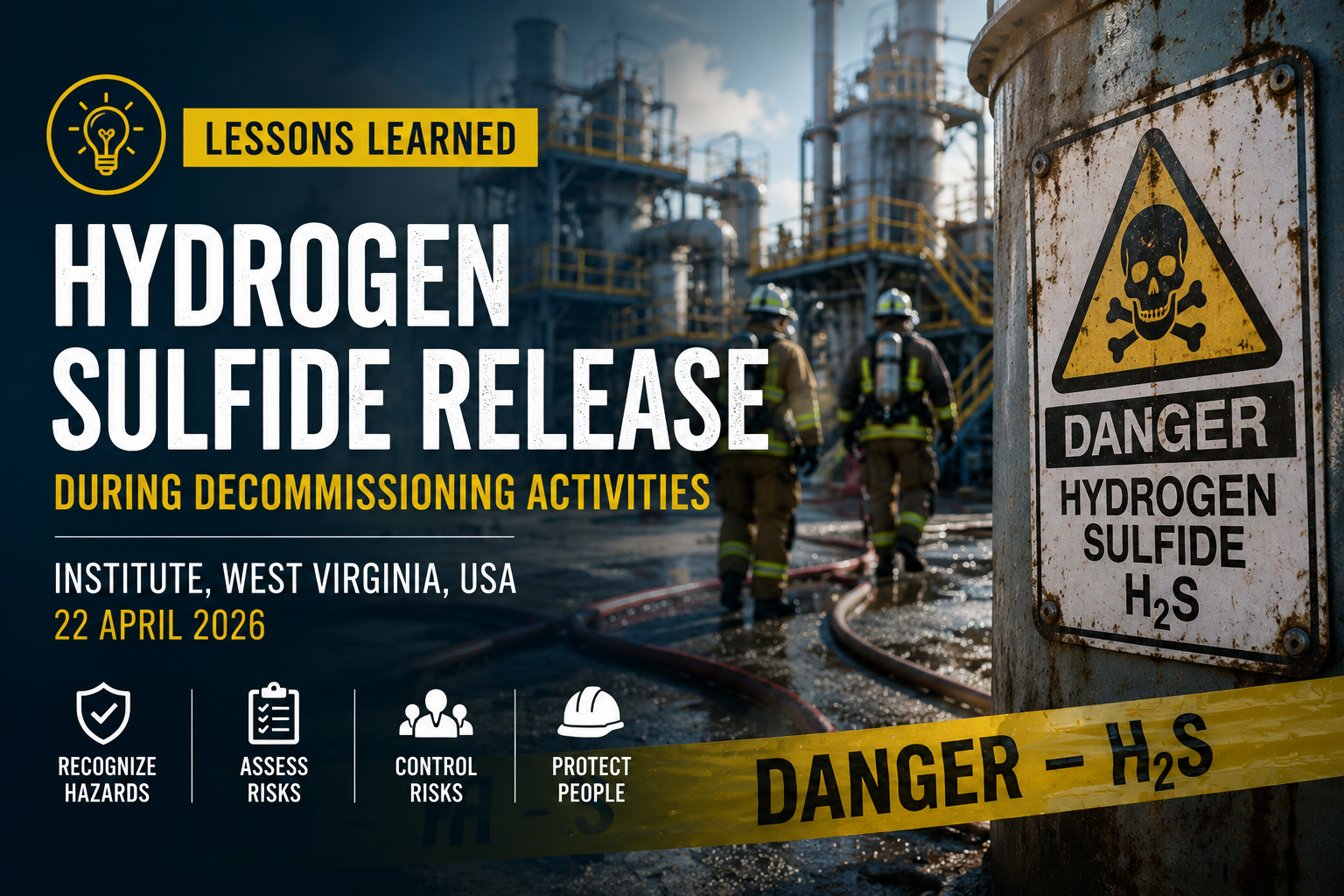
    On 22 April 2026, two workers were killed and more than 20 others were affected following the release of hydrogen sulfide (H₂S) during decommissioning and cleaning operations at an industrial facility in Institute, West Virginia, USA. Preliminary reports indicate that a chemical reaction involving nitric acid and residual process materials generated large quantities of toxic gas, exposing workers in the immediate vicinity.

    Although the official investigation is still ongoing, the incident highlights the significant hazards associated with non-routine work, chemical incompatibility, management of change, maintenance planning and emergency preparedness. Many of the lessons extend well beyond the chemical sector and are directly relevant to manufacturing, utilities, mining, construction, pharmaceuticals, food processing and other industries that undertake cleaning, shutdown or decommissioning activities.


    Incident Overview

    During planned decommissioning activities, personnel were engaged in cleaning and preparing equipment for shutdown. A reaction involving nitric acid and residual substances reportedly produced hydrogen sulfide gas.

    The release resulted in multiple casualties before emergency responders secured the area and implemented protective measures.

    At the time of publication, the precise sequence of events and underlying technical causes remain subject to official investigation.


    What is Hydrogen Sulfide?

    Hydrogen sulfide (H₂S) is a colourless, highly toxic and flammable gas that is commonly encountered in industries such as oil and gas, chemical processing, wastewater treatment and mining. Although it is often associated with a “rotten egg” smell, exposure can quickly deaden the sense of smell, making it impossible to rely on odour as a warning. Even brief exposure to high concentrations can cause rapid collapse, respiratory failure and death.

    In the oil and gas industry, H₂S is frequently found in sour crude oil and natural gas reservoirs and may be released during drilling, production, refining, tank cleaning or maintenance activities. It can also be generated by certain chemical reactions or the decomposition of sulphur-containing materials.


    Immediate Factors

    Based on available information, several direct contributors may have been present:

    • Introduction of incompatible chemicals during cleaning or decommissioning.
    • Generation of hydrogen sulfide through an unintended chemical reaction.
    • Worker exposure to a rapidly developing toxic atmosphere.
    • Limited opportunity for escape once hazardous concentrations developed.
    • Non-routine work activities creating conditions outside normal operating assumptions.

    Underlying Organisational Factors

    Planning for Non-Routine Activities

    Many organisations devote significant resources to controlling routine production risks while underestimating hazards associated with shutdowns, maintenance or demolition activities.

    Tasks involving cleaning, dismantling or disposal often involve altered equipment configurations, residual chemicals and changing responsibilities that increase uncertainty.

    Chemical Knowledge and Compatibility

    Cleaning agents may appear benign when considered individually but can become highly hazardous when mixed with residues or other process chemicals.

    Failure to identify incompatible substances before work commences can result in toxic gas generation, fire, explosion or violent reactions.

    Hazard Identification

    Traditional risk assessments may focus on mechanical hazards while overlooking atmospheric hazards created by process chemistry.

    Effective planning requires systematic evaluation of all potential reactions, including those involving contaminants or residual deposits.

    Management of Change

    Transitioning from production to shutdown frequently changes process conditions, staffing arrangements and operating procedures.

    Without formal review and approval, assumptions that were valid during normal operation may no longer remain appropriate.

    Permit-to-Work and Work Authorisation

    Permits should ensure that all chemical hazards have been assessed before introducing cleaning agents or opening process equipment.

    Verification steps should include chemical inventories, isolation status, atmospheric monitoring requirements and emergency arrangements.

    Competence and Training

    Personnel conducting decommissioning work require sufficient understanding of process chemistry and toxic gas hazards.

    Contractors or temporary workers unfamiliar with facility-specific risks may be particularly vulnerable.

    Emergency Preparedness

    Hydrogen sulfide can incapacitate individuals within seconds at high concentrations, leaving little opportunity for self-rescue.

    Emergency plans should therefore prioritise prevention, rapid detection and controlled response rather than relying solely on rescue capability.


    Potential Systemic Weaknesses

    Although not confirmed in this incident, investigations into similar events have frequently identified:

    • Inadequate review of chemical compatibility.
    • Insufficient hazard analysis for maintenance activities.
    • Poor communication between engineering, operations and contractors.
    • Failure to recognise residual hazards within supposedly empty equipment.
    • Incomplete documentation during shutdown planning.
    • Lack of continuous gas monitoring.
    • Overreliance on historical experience rather than formal risk assessment.

    Key Lessons for Industry

    Non-Routine Work Often Presents the Highest Risk

    Shutdowns, maintenance and decommissioning frequently involve changing conditions and incomplete information. These activities deserve at least the same level of planning and oversight as routine production.

    Residual Chemicals Can Be Dangerous

    Equipment believed to be empty may still contain deposits capable of reacting violently with cleaning agents or introduced chemicals.

    Atmospheric Hazards Can Develop Rapidly

    Toxic gases such as hydrogen sulfide may accumulate without visible warning. Continuous monitoring and effective ventilation are essential where credible exposure risks exist.

    Chemical Compatibility Must Be Verified

    Every cleaning chemical should be assessed against known process materials, contaminants and residues before use.

    Effective Communication Prevents Accidents

    Operations personnel, engineers, contractors and supervisors should share a common understanding of the planned work, hazards and contingency arrangements.

    Emergency Response Depends on Preparation

    Workers must know evacuation procedures, alarm systems and exclusion zones before work begins, as rescue opportunities may be extremely limited.


    Recommendations Applicable Across Industries

    1. Establish formal planning processes for all shutdown, maintenance and decommissioning activities.
    2. Require documented chemical compatibility reviews before introducing cleaning agents or reactive substances.
    3. Expand risk assessments to include potential toxic gas generation and secondary chemical reactions.
    4. Implement robust management of change procedures whenever operating conditions or processes are altered.
    5. Strengthen permit-to-work systems to address chemical hazards, atmospheric risks and residual contamination.
    6. Verify that equipment has been isolated, drained, cleaned and tested before maintenance begins.
    7. Deploy appropriate gas detection systems wherever hazardous atmospheres may develop.
    8. Ensure workers and contractors receive training on process-specific chemical hazards rather than relying solely on generic induction programmes.
    9. Conduct pre-job briefings that review hazards, emergency arrangements and communication protocols.
    10. Maintain effective ventilation during cleaning and confined-space operations where practicable.
    11. Regularly review emergency response plans for toxic gas releases and ensure responders understand the risks of secondary exposure.
    12. Encourage workers to stop work immediately if unexpected reactions, odours or atmospheric conditions are encountered.
    13. Capture and share lessons learned from maintenance and decommissioning activities across sites and business units.
    14. Periodically audit chemical inventories, safety data sheets and compatibility information to ensure they remain current and accessible.
    15. Foster a reporting culture where concerns about non-routine work can be raised without fear of reprisal.

    Conclusion

    While investigators continue to determine the precise causes of the hydrogen sulfide release, the incident serves as a powerful reminder that catastrophic events often occur during non-routine activities rather than normal operations.

    Comprehensive planning, chemical hazard awareness, effective management of change, disciplined permit systems and robust emergency preparedness remain essential safeguards across all industries. Organisations that proactively address these areas can significantly reduce the likelihood of similar incidents and better protect workers, contractors and surrounding communities.


    Disclaimer

    This article has been prepared using publicly available information, including official reports, media coverage and other credible sources available at the time of publication. In some cases, reasonable assumptions and professional judgement have been applied where complete or verified information is not yet available, particularly where official investigations remain ongoing.

    The analysis, observations and recommendations presented are intended solely for educational and informational purposes to promote discussion and improve workplace safety. They should not be interpreted as definitive findings, legal advice, regulatory guidance or professional engineering or safety advice. Readers should undertake their own risk assessments and seek appropriate professional or legal advice before relying on any information contained in this publication.

    © 2026 World Safety News. All rights reserved.
    This publication and its contents are protected by copyright law. No part of this document may be reproduced, distributed, transmitted or published in any form without prior written permission from World Safety News, except for brief quotations used for non-commercial purposes with appropriate attribution.

  • Lessons Learned: Worker Killed by Front-End Loader

    Lessons Learned: Worker Killed by Front-End Loader

    An Incident Analysis of a Reversing Mobile Plant Fatality

    Incident Date: 5 May 2026
    Location: Lara, Victoria, Australia
    Industry: Warehousing / Agricultural Storage and Logistics
    Incident Type: Pedestrian struck by reversing mobile plant (front-end loader)
    Status: Official investigation ongoing

    Executive Summary

    A 21-year-old worker was fatally struck by a reversing front-end loader while cleaning fertiliser residue from the rear of a semi-trailer at a storage warehouse in Lara, Victoria. According to publicly available information, the worker was using an air compressor when the collision occurred at approximately 8:15 am. The incident is being investigated by WorkSafe Victoria.

    Although the official investigation has not concluded, the circumstances suggest a classic and well-recognised critical risk involving the interaction between pedestrians and mobile plant. This analysis identifies likely failed controls and organisational factors that may have contributed to the fatality.

    Known Facts

    Based on information released publicly:

    • The deceased was a 21-year-old worker.
    • The incident occurred at a storage warehouse in Lara, Victoria.
    • The worker was reportedly using an air compressor to clean fertiliser from the rear of a semi-trailer.
    • A reversing front-end loader struck the worker.
    • The collision occurred at approximately 8:15 am.
    • WorkSafe Victoria is investigating the incident.

    Incident Analysis

    1. Absent or Failed Defences

    The following critical controls may have been absent, ineffective or bypassed:

    • Inadequate physical separation between pedestrians and mobile plant.
    • Failure to establish exclusion zones during reversing operations.
    • Lack of engineering controls such as proximity detection or collision avoidance systems.
    • Insufficient segregation of cleaning activities from active vehicle movements.
    • Potential absence of spotters or traffic controllers during reversing.
    • Possible deficiencies in site traffic management arrangements.

    2. Individual and Team Actions (Presumed)

    There is no evidence that any individual acted recklessly. However, reasonable assumptions include:

    • The loader operator may have been unaware of the worker’s location due to restricted visibility.
    • The worker may have entered or remained within the loader’s blind spot while focused on the cleaning task.
    • Communication between personnel regarding vehicle movements may have been ineffective or absent.

    These are hypotheses only and should not be interpreted as findings of fault.

    3. Task and Environmental Conditions

    Several workplace conditions may have increased the likelihood of the event:

    • Concurrent execution of pedestrian cleaning work and heavy equipment operations.
    • Potential noise from compressed-air cleaning reducing situational awareness.
    • Dust, equipment geometry or trailer positioning affecting visibility.
    • Time pressures associated with loading or unloading activities.

    4. Organisational Factors (Likely Contributing Causes)

    From an investigative perspective, the following organisational issues warrant examination:

    • Traffic Management: Whether the site had an effective traffic management plan that physically separated pedestrians and mobile plant.
    • Work Planning: Whether trailer cleaning could have been scheduled while mobile equipment was immobilised.
    • Risk Assessment: Whether dynamic risks associated with simultaneous operations had been adequately assessed.
    • Supervision: Whether supervisors ensured critical controls remained effective throughout the task.
    • Training and Competency: Whether both operators and ground personnel fully understood exclusion zones and interaction rules.
    • Contractor or Young Worker Management: Whether additional supervision or induction was provided for relatively inexperienced workers.

    5. Root Causes (Presumed)

    The most probable root causes are organisational rather than individual:

    1. Failure to adequately eliminate or isolate pedestrian exposure to moving mobile plant.
    2. Inadequate design or implementation of a traffic management system.
    3. Failure to separate incompatible tasks (cleaning and heavy equipment movement).
    4. Reliance on administrative controls and human vigilance instead of engineered separation.
    5. Insufficient verification that critical controls remained effective during normal operations.

    Lessons for Industry

    This incident reinforces several universal safety principles:

    • Separate pedestrians and mobile plant wherever practicable using engineered controls.
    • Design traffic flows to minimise or eliminate reversing.
    • Establish and enforce exclusion zones around operating equipment.
    • Schedule maintenance and cleaning activities outside active vehicle movements.
    • Use technology such as reversing cameras, proximity sensors and collision warning systems where appropriate.
    • Regularly audit traffic management arrangements rather than relying solely on documented procedures.
    • Ensure young or inexperienced workers receive enhanced supervision and mentoring.

    Recommendations

    Health and safety professionals should consider the following actions:

    1. Review site traffic management plans to ensure physical separation of pedestrians and vehicles.
    2. Conduct critical control verification for mobile plant interactions.
    3. Introduce designated pedestrian-only routes protected by barriers where feasible.
    4. Eliminate unnecessary reversing through one-way traffic systems and revised layouts.
    5. Assess opportunities to automate or isolate trailer cleaning activities.
    6. Require positive communication protocols before mobile equipment enters shared work areas.
    7. Implement competency assessments for operators and workers exposed to vehicle interactions.
    8. Evaluate engineering controls including cameras, radar, proximity alarms and geofencing technology.
    9. Periodically observe actual work practices to confirm procedures are followed in the field.
    10. Foster a culture where any worker can stop work if pedestrian and vehicle separation cannot be maintained.

    Conclusion

    Although the official investigation is ongoing, this tragedy illustrates one of the most persistent fatal risks across warehousing, logistics, agriculture, mining and manufacturing: the interaction between pedestrians and mobile plant. Experience shows that administrative controls and individual vigilance alone are rarely sufficient. The most effective prevention strategies focus on eliminating shared workspaces, engineering physical separation and ensuring that work is designed so people are not exposed to moving equipment in the first place.


    Disclaimer

    This article is provided for educational and informational purposes only. The analysis presented is based on publicly available information available at the time of publication. Official investigations by OSHA and other authorities remain ongoing, and additional facts may emerge that alter or clarify the circumstances of the incident. This article should not be interpreted as a formal incident investigation, legal opinion or professional safety advice.

  • Lessons Learned from the Vibrantz Paint Factory Explosion

    Lessons Learned from the Vibrantz Paint Factory Explosion

    Preliminary Incident Analysis Following Fatal Explosion in Llodio, Spain

    Incident Overview

    A worker was killed following an explosion at the Vibrantz Technologies paint manufacturing facility in Llodio, Álava, Spain, during the early hours of 9 June 2026.

    According to initial reports from Spanish media and emergency services, the explosion occurred shortly after midnight in an area associated with industrial processing equipment. Early reports indicate that an industrial furnace or similar process equipment may have been involved, although authorities have not yet released a definitive explanation of the initiating event.

    Emergency services responded rapidly to the scene, however the worker sustained fatal injuries. Investigations by local authorities, workplace safety regulators and technical specialists are ongoing.

    At the time of writing, limited information has been released publicly regarding the exact circumstances of the incident. Nevertheless, the event highlights several important lessons applicable across manufacturing, chemical processing, coatings production and other industrial sectors.


    What We Know

    Based on publicly available information, the following appears reasonably established:

    • The incident occurred at the Vibrantz manufacturing facility in Llodio, Spain.
    • The facility is involved in the production of paints, pigments and specialty chemical products.
    • The incident occurred during night shift operations.
    • An explosion occurred within the facility.
    • One worker was fatally injured.
    • Emergency services attended the scene.
    • Authorities have commenced a formal investigation.

    What We Do Not Yet Know

    Several critical questions remain unanswered:

    • What substance was involved?
    • Was the explosion chemical, mechanical or thermal in nature?
    • Did the event originate inside a furnace, vessel, duct or process line?
    • Were flammable vapours or combustible dusts present?
    • Was maintenance being performed at the time?
    • Were safety systems operating as intended?
    • Were any alarms activated before the incident?
    • Were there any previous incidents or warning signs?

    These uncertainties mean that any analysis at this stage should be considered preliminary.


    Understanding the Hazard

    Paint manufacturing environments often contain a combination of hazards capable of generating catastrophic explosions, including:

    • Flammable solvents.
    • Combustible dusts.
    • Pressurised equipment.
    • Thermal processing systems.
    • Mixing operations.
    • Chemical reactions.
    • Electrical ignition sources.

    In many cases, a serious explosion requires three elements:

    1. A fuel source.
    2. An ignition source.
    3. Conditions allowing the energy release to propagate.

    Because these conditions are well understood, modern facilities typically employ multiple layers of protection to prevent such events.


    Preliminary Incident Analysis

    Potential Immediate Cause

    Loss of Control of Hazardous Energy

    Based on the limited information available, the most likely immediate cause was a loss of control of hazardous energy resulting in an explosion.

    Potential initiating mechanisms include:

    • Ignition of flammable vapours.
    • Combustible dust explosion.
    • Overpressure event within process equipment.
    • Failure of thermal processing equipment.
    • Mechanical failure leading to ignition.

    At present, investigators have not identified which mechanism occurred.


    Potential Contributing Factors

    Process Safety Management Deficiencies

    Many major industrial explosions are linked to failures in process safety management rather than traditional occupational safety issues.

    Investigators may examine whether:

    • Hazard studies were completed.
    • Critical controls were identified.
    • Safety systems were tested and maintained.
    • Operational limits were clearly defined.
    • Deviations from procedures were occurring.

    Where high-consequence hazards exist, failures in process safety controls can have catastrophic outcomes.


    Equipment Integrity and Maintenance

    Industrial furnaces, reactors, dryers and associated equipment operate under demanding conditions.

    Potential areas of investigation may include:

    • Equipment condition.
    • Maintenance records.
    • Inspection regimes.
    • Defect reporting systems.
    • Mechanical integrity programs.

    A deterioration in equipment condition may not immediately cause failure, but can create vulnerabilities that eventually lead to a catastrophic event.


    Ignition Source Management

    Where flammable materials are present, controlling ignition sources becomes critical.

    Investigators may assess:

    • Electrical equipment classification.
    • Static electricity controls.
    • Hot work controls.
    • Grounding and bonding systems.
    • Mechanical spark generation.

    Many industrial explosions occur when a combustible atmosphere develops unexpectedly and encounters an available ignition source.


    Change Management

    A common feature of major industrial incidents is unmanaged change.

    Potential changes that can introduce risk include:

    • New products.
    • Different raw materials.
    • Equipment modifications.
    • Maintenance activities.
    • Process parameter adjustments.
    • Production increases.

    Even seemingly minor changes can alter the risk profile of a process if not properly assessed.


    Night Shift Factors

    The incident reportedly occurred during overnight operations.

    While there is no evidence that shift timing contributed directly, investigations may consider:

    • Staffing levels.
    • Supervision arrangements.
    • Fatigue.
    • Availability of technical support.
    • Emergency response capability.

    Many organisations operate safely around the clock, but reduced staffing can increase vulnerability when abnormal situations develop.


    Potential Root Causes

    Although definitive conclusions cannot yet be drawn, investigators may ultimately identify root causes relating to one or more of the following areas:

    Process Hazard Management

    Failure to adequately identify, assess or control high-consequence hazards.

    Mechanical Integrity

    Failure to inspect, maintain or replace critical equipment.

    Operational Control

    Failure to ensure processes remained within safe operating limits.

    Management of Change

    Failure to recognise and manage changes affecting process safety.

    Organisational Learning

    Failure to identify and respond to warning signs, near misses or equipment defects before a catastrophic event occurred.


    Lessons for Industry

    1. Process Safety Is Different from Personal Safety

    Many organisations achieve excellent injury statistics while significant process safety risks remain unmanaged.

    The absence of injuries does not necessarily indicate that catastrophic hazards are under control.


    2. Critical Controls Must Be Identified and Verified

    Facilities handling flammable materials should clearly identify:

    • Explosion prevention controls.
    • Fire protection systems.
    • Gas detection systems.
    • Ventilation arrangements.
    • Emergency shutdown systems.

    These controls should be routinely verified to ensure they remain effective.


    3. Mechanical Integrity Programs Matter

    A robust mechanical integrity program is one of the most important defences against catastrophic process failures.

    Inspection, maintenance and defect management systems should focus on preventing loss of containment and equipment failure.


    4. Small Deviations Can Create Major Consequences

    Many major industrial disasters originate from seemingly minor departures from normal operating conditions.

    Strong supervision, procedural compliance and operational discipline remain essential.


    5. Learn from Near Misses

    Explosions are rarely completely unpredictable.

    They are often preceded by warning signs such as:

    • Equipment defects.
    • Process alarms.
    • Minor leaks.
    • Small fires.
    • Unusual operating conditions.

    Organisations should ensure these signals are identified, investigated and acted upon.


    Recommended Actions for Industry

    Organisations operating chemical manufacturing, coatings production, paint processing or similar facilities should consider:

    • Reviewing process hazard analyses.
    • Verifying explosion protection measures.
    • Auditing mechanical integrity programs.
    • Reviewing ignition source controls.
    • Confirming emergency shutdown arrangements.
    • Reviewing management of change procedures.
    • Auditing preventive maintenance systems.
    • Assessing night shift supervision arrangements.
    • Reviewing emergency response and evacuation procedures.
    • Re-evaluating critical process safety controls.

    Final Thoughts

    While the precise cause of the Llodio explosion remains under investigation, the incident serves as a reminder of the potentially devastating consequences associated with industrial processing operations.

    Regardless of the final findings, organisations handling flammable materials, combustible dusts, thermal processing systems or hazardous chemicals should take this opportunity to review their own controls and ensure that critical process safety risks remain effectively managed.

    Every major industrial incident offers lessons for industry. The value of those lessons lies not only in understanding what went wrong, but in applying those insights before a similar event occurs elsewhere.


    Disclaimer

    This article has been prepared for educational and informational purposes only and is based solely on publicly available information available at the time of writing. Official investigations remain ongoing, and many details surrounding the incident have not yet been confirmed. The analysis presented is preliminary in nature and includes reasonable assumptions based on common industrial hazards, process safety principles and historical incident trends. It should not be interpreted as a formal investigation, legal opinion or definitive determination of causation. Future findings may alter or clarify the circumstances discussed in this article.

  • A Massive Explosion, a Lost Rocket, and Zero Fatalities: When Safety Works

    A Massive Explosion, a Lost Rocket, and Zero Fatalities: When Safety Works

    In an era where workplace incidents often dominate headlines because of the lives lost, the recent Blue Origin New Glenn launch pad explosion offers a different story—one that safety professionals should pay close attention to.

    On 28 May 2026, Blue Origin’s New Glenn rocket suffered a catastrophic failure during a static fire test at Cape Canaveral, Florida. Images of the incident showed an enormous fireball engulfing the launch pad, destroying the rocket and causing significant damage to surrounding infrastructure. The financial cost is expected to be substantial, and the impact on launch schedules may be felt for months.

    Yet despite the scale of the explosion, one critical fact stands out:

    Nobody was injured. Nobody was killed.

    For safety professionals, that outcome deserves just as much attention as the failure itself.

    While investigations will undoubtedly focus on the technical causes of the explosion, there is another equally important question worth asking:

    What went right?

    The Difference Between an Incident and a Tragedy

    The aerospace industry routinely works with some of the most hazardous materials and energy sources on the planet.

    Rocket engines operate at extreme temperatures and pressures. Cryogenic fuels are highly volatile. Propellant systems contain enormous amounts of stored energy.

    Everyone involved understands that the potential consequences of failure can be catastrophic.

    The reality is that a launch pad explosion is not simply a fire event—it is an uncontrolled release of massive amounts of energy capable of causing multiple fatalities if people are exposed.

    Yet in this case, despite the destruction of a multi-billion-dollar asset, human life was protected.

    That outcome was not luck.

    It was the result of planning.

    Safety Systems Doing Exactly What They Were Designed to Do

    One of the most important principles in modern safety management is recognising that controls exist for a reason.

    Too often, organisations only notice controls when they fail.

    The Blue Origin incident reminds us that effective controls often go unnoticed because they work.

    Before the test commenced, the launch facility was operating under established hazardous testing protocols. Personnel had been removed from the danger zone, exclusion areas had been established, and emergency response systems were in place.

    When the failure occurred, there were no workers standing next to the rocket.

    There were no maintenance crews operating nearby.

    There were no visitors observing from unsafe locations.

    The system had been designed around the assumption that something could go wrong.

    And when something did go wrong, people were protected.

    The Importance of Exclusion Zones

    Many industries can learn from this principle.

    In construction, mining, manufacturing, logistics, and energy production, organisations frequently rely on administrative controls and worker behaviour to manage risk.

    The aerospace industry often takes a different approach.

    Where catastrophic hazards exist, people are removed from exposure altogether.

    Launch facilities are designed with extensive exclusion zones because engineers accept that failures cannot always be prevented.

    The focus therefore shifts toward limiting consequences.

    This approach reflects a simple but powerful philosophy:

    If people are not exposed, they cannot be injured.

    The same thinking can be applied across many industries.

    Whether managing mobile plant, high-voltage systems, chemical processes, or heavy lifting operations, organisations should continually ask:

    “Can we remove people from the line of fire?”

    Planning for Failure

    One of the hallmarks of mature safety systems is recognising that failures will occur.

    No organisation sets out expecting a catastrophic event, but resilient organisations plan for them anyway.

    Blue Origin’s testing arrangements appear to have embraced this reality.

    Rather than assuming the rocket would perform perfectly, the testing environment was designed around a more important question:

    “What happens if it doesn’t?”

    This mindset is increasingly recognised as a critical component of modern safety thinking.

    The best organisations do not simply focus on preventing failure.

    They focus on ensuring failures do not become disasters.

    The Value of Emergency Preparedness

    Another lesson from the incident is the importance of emergency readiness.

    Large-scale explosions create confusion, uncertainty, and rapidly changing conditions.

    In these environments, emergency response arrangements become critical.

    Although details remain limited, the absence of injuries suggests emergency planning, communication systems, site access controls, and response coordination were all functioning effectively.

    Emergency preparedness is often viewed as a compliance requirement.

    Events like this demonstrate why it is much more than that.

    When serious incidents occur, preparation can be the difference between a recoverable event and a mass casualty incident.

    A Reminder for Industry Leaders

    The destruction of the New Glenn rocket will understandably generate significant technical investigation.

    Engineers will seek to understand the initiating event, contributing factors, and system failures.

    Those lessons will be important.

    However, there is another lesson that business leaders should not overlook.

    The most valuable asset on any site is not equipment.

    It is people.

    The rocket can be rebuilt.

    The launch pad can be repaired.

    Schedules can be adjusted.

    Lives cannot be replaced.

    The fact that no workers were harmed should be viewed as evidence that certain aspects of the safety system performed exceptionally well under extreme circumstances.

    Measuring Success Differently

    Many organisations evaluate safety performance primarily through injury statistics.

    While these metrics have value, they often fail to recognise successful risk management.

    A more mature perspective asks different questions:

    • Were workers exposed?
    • Did critical controls function?
    • Were emergency arrangements effective?
    • Did barriers prevent harm?

    By those measures, the Blue Origin incident provides a powerful example of safety systems working as intended.

    The technical failure was significant.

    The protection of human life was even more significant.

    Final Thoughts

    The explosion of Blue Origin’s New Glenn rocket will likely be studied for years within the aerospace industry.

    Investigators will identify technical causes, engineering lessons, and opportunities for improvement.

    Yet perhaps the most important lesson is already visible.

    A catastrophic event occurred.

    A major asset was destroyed.

    Millions of dollars in infrastructure were damaged.

    And every worker went home.

    In a profession dedicated to protecting people, that outcome should not be overlooked.

    Because sometimes the most important safety stories are not about what failed.

    They are about what worked.


    Disclaimer

    This article is provided for educational and informational purposes only. It is based on publicly available information available at the time of writing. Official investigations into the Blue Origin New Glenn incident remain ongoing, and conclusions regarding causes and contributing factors may change as additional information becomes available. Nothing in this article should be interpreted as a legal determination of fault, liability, negligence, or regulatory non-compliance.

  • Eight Workers Killed in Molten Metal Incident

    Eight Workers Killed in Molten Metal Incident

    Preliminary Incident Analysis and Lessons for Industry

    Incident Overview

    On 8 June 2026, a catastrophic workplace incident occurred at the Visakhapatnam Steel Plant in Andhra Pradesh, India, resulting in the deaths of eight workers and serious injuries to at least six others.

    According to initial reports, the incident occurred in the Steel Melting Shop (SMS) during the handling of molten metal. Early media reports indicate that a vessel, ladle or container carrying molten iron may have failed, become detached, or fallen during a crane-assisted transfer operation. The resulting release of molten metal engulfed workers operating in the area, causing catastrophic burn injuries.

    Emergency response teams were immediately deployed, and injured workers were transported to local hospitals. Authorities have commenced a formal investigation into the circumstances surrounding the event.

    At the time of publication, many critical details remain unconfirmed. Nevertheless, the incident highlights the devastating consequences that can occur when controls surrounding high-energy industrial processes fail.


    What We Know

    Based on publicly available information, the following facts appear reasonably established:

    • The incident occurred at the Visakhapatnam Steel Plant in India.
    • The event took place within the Steel Melting Shop.
    • Eight workers were killed.
    • At least six additional workers were seriously injured.
    • Molten iron was released during operations.
    • A crane-assisted handling activity may have been involved.
    • Investigations are underway.

    What Remains Unknown

    Several critical questions have not yet been answered:

    • Did the ladle itself fail?
    • Did lifting equipment fail?
    • Was there a crane malfunction?
    • Was the load correctly attached and secured?
    • Was maintenance overdue or deficient?
    • Were exclusion zones in place?
    • Were workers positioned beneath or adjacent to the suspended load?
    • Were there any known defects or prior warning signs?
    • Did environmental or operational factors contribute?
    • Were emergency response systems effective?

    These unanswered questions mean that any analysis at this stage should be regarded as preliminary.


    Understanding the Hazard

    Molten metal handling represents one of the highest consequence activities in heavy industry.

    A typical steel ladle may contain many tonnes of molten iron at temperatures exceeding 1,400°C.

    Unlike many industrial hazards, incidents involving molten metal often provide little opportunity for workers to escape once a release occurs.

    For this reason, the steel industry generally relies on multiple layers of protection including:

    • Engineering controls
    • Equipment inspection regimes
    • Mechanical integrity programs
    • Exclusion zones
    • Operator competency
    • Permit systems
    • Emergency response arrangements

    When catastrophic incidents occur, investigators often find that several layers of protection have failed simultaneously.


    Preliminary Analysis

    Potential Immediate Cause

    Loss of Containment of Molten Metal

    The immediate event appears to have been a loss of containment during transfer operations.

    This may have occurred through:

    • Structural failure of a ladle.
    • Failure of lifting components.
    • Crane malfunction.
    • Incorrect attachment or rigging.
    • Failure of supporting structures.

    At present, investigators have not confirmed which of these scenarios occurred.


    Potential Contributing Factors

    Mechanical Integrity Failure

    One of the first areas investigators will likely examine is the integrity of equipment involved in the operation.

    Heavy industrial equipment is exposed to:

    • Extreme temperatures.
    • Cyclic loading.
    • Fatigue stresses.
    • Corrosion.
    • Wear and degradation.

    If inspection and maintenance systems fail to identify deteriorating components, catastrophic failures can occur without warning.

    Potential questions include:

    • Were inspections completed as required?
    • Were defects identified but not addressed?
    • Were components operating within design limits?
    • Was the equipment approaching the end of its service life?

    Exposure to Suspended Loads

    Reports suggesting crane involvement raise another important issue.

    A fundamental principle of lifting operations is that workers should not be positioned beneath suspended loads wherever reasonably practicable.

    If personnel were located within the potential drop zone during transfer activities, investigators may examine:

    • Work planning.
    • Traffic management.
    • Exclusion zone controls.
    • Operational supervision.

    Even if equipment failure initiated the event, worker exposure may have significantly influenced the severity of consequences.


    Inadequate Critical Risk Controls

    Many high-hazard industries utilise Critical Risk Management (CRM) frameworks.

    Under such systems, activities involving:

    • Molten metal.
    • Cranes.
    • Heavy lifting.
    • High temperatures.

    would typically be designated as critical risks requiring enhanced controls and verification.

    Investigators may seek to determine whether:

    • Critical controls were identified.
    • Controls were verified.
    • Verification findings were acted upon.
    • Assurance activities were effective.

    Organisational and Management Factors

    Major industrial incidents rarely result from a single failure.

    Investigations frequently uncover broader organisational influences such as:

    • Production pressures.
    • Deferred maintenance.
    • Resource constraints.
    • Inadequate supervision.
    • Deficient risk assessments.
    • Ineffective auditing.

    While there is currently no evidence that any of these factors contributed to this incident, they will almost certainly form part of the investigation scope.


    Potential Root Causes

    Although it is far too early to identify definitive root causes, investigators may ultimately identify failures associated with:

    Asset Management

    Failure to effectively inspect, maintain or replace critical equipment.

    Risk Management

    Failure to adequately identify and control hazards associated with molten metal transfer.

    Operational Control

    Failure to manage worker exposure during high-risk activities.

    Leadership and Governance

    Failure to ensure critical controls remained effective over time.


    Lessons for Industry

    Even at this early stage, several important lessons emerge.

    1. Mechanical Integrity Saves Lives

    Inspection and maintenance systems are often invisible when they work well.

    When they fail, the consequences can be catastrophic.

    Critical equipment must be subject to:

    • Risk-based inspection.
    • Formal maintenance programs.
    • Fitness-for-service assessments.
    • Independent verification where appropriate.

    2. Keep People Out of the Line of Fire

    Workers should not be exposed to suspended loads, molten metal transfer routes or other catastrophic energy sources unless absolutely necessary.

    Physical separation remains one of the most effective risk controls available.


    3. Critical Controls Must Be Actively Verified

    Many organisations identify critical controls but fail to verify their effectiveness.

    Verification activities should confirm that:

    • Controls exist.
    • Controls function correctly.
    • Controls remain effective over time.

    4. High-Consequence Hazards Require High-Consequence Thinking

    Operations involving molten metal, heavy lifting and extreme temperatures should be managed with the assumption that failures can be fatal.

    Risk assessments should focus not only on likelihood but also on potential consequence.


    5. Near Misses Matter

    Many catastrophic failures are preceded by:

    • Equipment defects.
    • Minor incidents.
    • Warning signs.
    • Maintenance concerns.

    Organisations should ensure these signals are identified, reported and acted upon before they escalate.


    Recommended Actions for Industry

    Organisations operating high-risk industrial processes should consider:

    • Reviewing crane and lifting equipment inspection programs.
    • Auditing mechanical integrity systems.
    • Verifying critical controls associated with molten metal handling.
    • Reviewing exclusion zone arrangements.
    • Conducting line-of-fire hazard assessments.
    • Reassessing emergency response capabilities.
    • Reviewing asset lifecycle management programs.
    • Confirming competence requirements for operators and supervisors.
    • Auditing maintenance backlog and defect management systems.
    • Strengthening assurance activities for critical risks.

    Final Thoughts

    The Visakhapatnam Steel Plant disaster is a tragic reminder of the enormous energy present within modern industrial processes.

    While investigators continue to establish exactly what occurred, the incident reinforces a lesson that extends far beyond the steel industry: when organisations manage catastrophic hazards, the effectiveness of critical controls can determine whether an abnormal event becomes a minor disruption or a major loss of life.

    As more information becomes available, this incident may provide valuable insights into asset integrity, critical risk management and the importance of maintaining multiple layers of protection around high-consequence activities.


    Disclaimer

    This article has been prepared for educational and informational purposes only. It is based solely on publicly available information available at the time of writing. Official investigations remain ongoing, and additional facts may emerge that alter or clarify the circumstances surrounding the incident. The analysis presented should not be interpreted as a formal investigation, legal opinion, or definitive determination of causation.